_________________
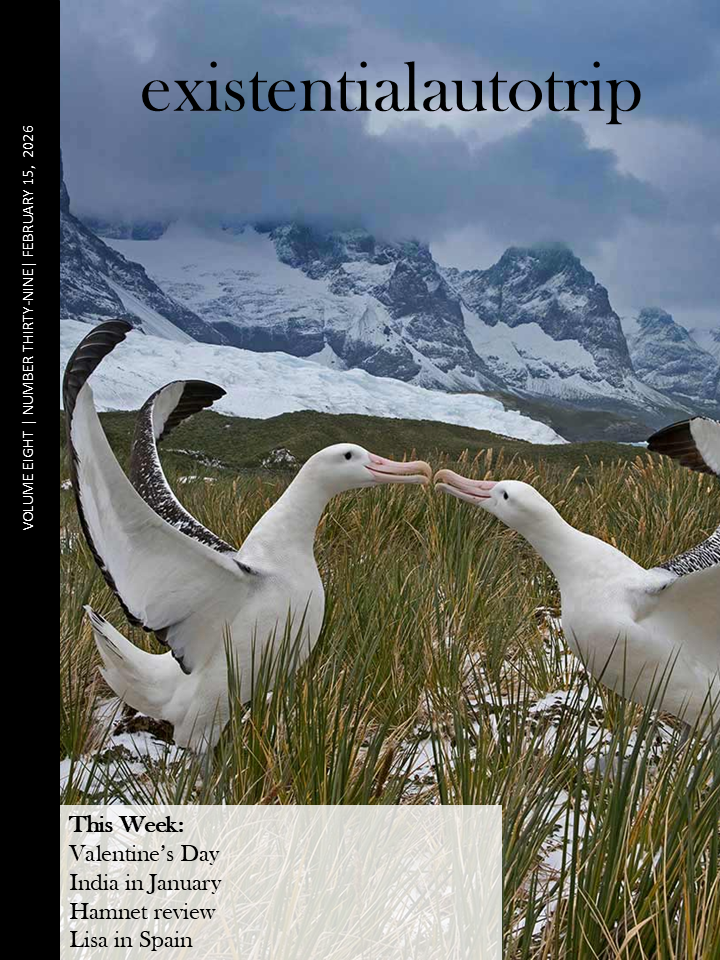
Tucker’s February 15, 2026 cover
# 1752
_________________________
Thoughts from Dom’s Porch
Dom Capossela with AI
It can be about roses and reservations, rings and chocolates, and the soft panic of making the perfect gesture. But love is rarely grand, never theatrical. Love is the frequently repeated “Good morning” and “Good night.” Or, annually, a simple kiss with a roughly drawn Valentine to mark the growth of the relationship.

Red-outline heart icon
File:Heart left-highlight jon 01.svg: Jon Phillips derivative work Bagande - File:Heart left-highlight jon 01.svg
Author: Bagande
__________________________________
More Thoughts from Dom’s Porch
How good was the recently deceased songwriter John Prine? Bob Dylan met Prine in the early 1970s and admired him immediately — even showing up unannounced to play harmonica at one of Prine’s early New York shows.
Decades later, Dylan still spoke of him with deep, unforced respect.
Let’s ask Bob to explain why since, in a 2009 interview with Bill Flanagan published in The Huffington Post, Dylan included John Prine among his list of favorite songwriters. His words:
“Prine's stuff is pure Proustian existentialism. Midwestern mindtrips to the nth degree. And he writes beautiful songs. I remember when Kris Kristofferson first brought him on the scene. All that stuff about "Sam Stone" the soldier junky daddy and "Donald and Lydia," where people make love from ten miles away. Nobody but Prine could write like that. If I had to pick one song of his, it might be "Lake Marie." I don't remember what album that's on.”
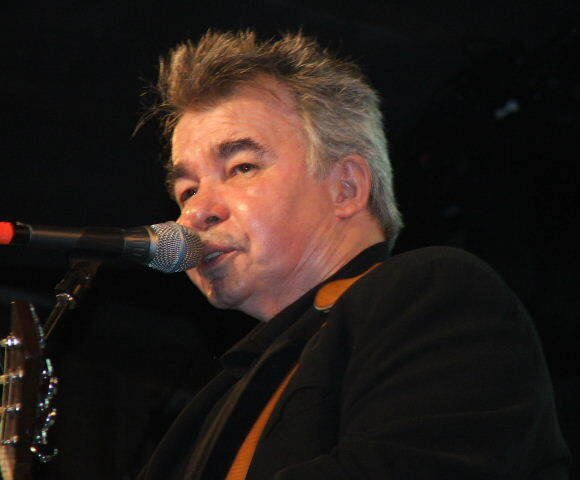
John Prine (age 59) at MerleFest (2006)
Ron Baker (https://www.flickr.com/photos/kingsnake) - https://www.flickr.com/photos/kingsnake/225426648/
John Prine at MerleFest (2006). Photo by Ron Baker.
This quick bio is from Wikipedia:
John Edward Prine (October 10, 1946 – April 7, 2020) was an American singer-songwriter of country-folk music. Widely cited as one of the most influential songwriters of his generation, Prine was known for his signature blend of humorous lyrics about love, life, and current events, often with elements of social commentaryand satire, as well as sweet songs and melancholy ballads.
He was active as a composer, recording artist, live performer, and occasional actor from the early 1970s until his death.
Wanna give his music a try?
Great Days: The John Prine Anthology (1993)
This is the definitive 2‑disc retrospective covering his early classics through the 1980s. It’s the closest thing to an official “Best Of.”
Prime Prine: The Best of John Prine (1976) — an early compilation from Atlantic Records.
John Prine Live (1988) — not a greatest‑hits album, but many fans treat it like one because it features his most beloved songs in iconic live versions.
___________________________________
More Thoughts from Dom’s Porch
A plug for Doctors without Borders
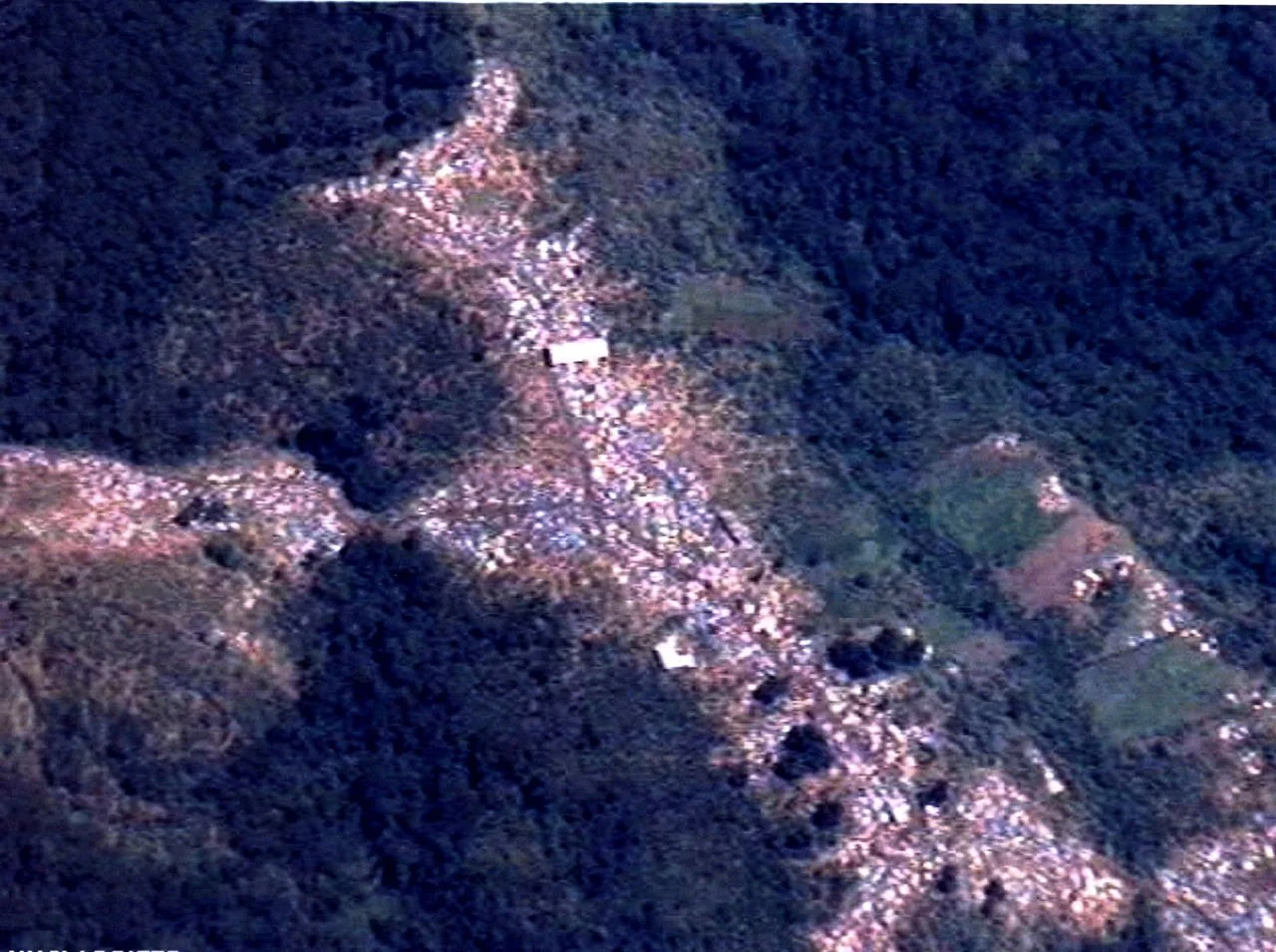
Aerial photograph of a Mihanda, Zaire refugee camp in 1996. Pictured are 500+ tents set up in the Mitumba Mountains.
http://osd.dtic.mil/photos/Dec1996/961202-N-0000O-002.html
U.S. Navy aerial photograph of the Mihanda refugee camp taken on Dec. 2, 1996. DoD photo. ID 961202-N-0000O-002
Doctors Without Borders/Médecins Sans Frontières (MSF) is on the ground in over 70 countries—providing urgently needed humanitarian aid in moments of crisis and conflict. Make a gift today to help us continue providing medical aid where it is needed most.
Your 100 percent tax-deductible gift helps MSF respond quickly to emergencies in places like Ukraine, Haiti, Yemen, and beyond.
For MSF, the ability to respond quickly to medical humanitarian emergencies is crucial to saving more lives. Unrestricted funds allow us to allocate our resources most efficiently and where the needs are greatest.
Donate to Help save lives. Donate now.
https://give.doctorswithoutborders.org/campaign/678302/donate
___________________
Kat’s Corner
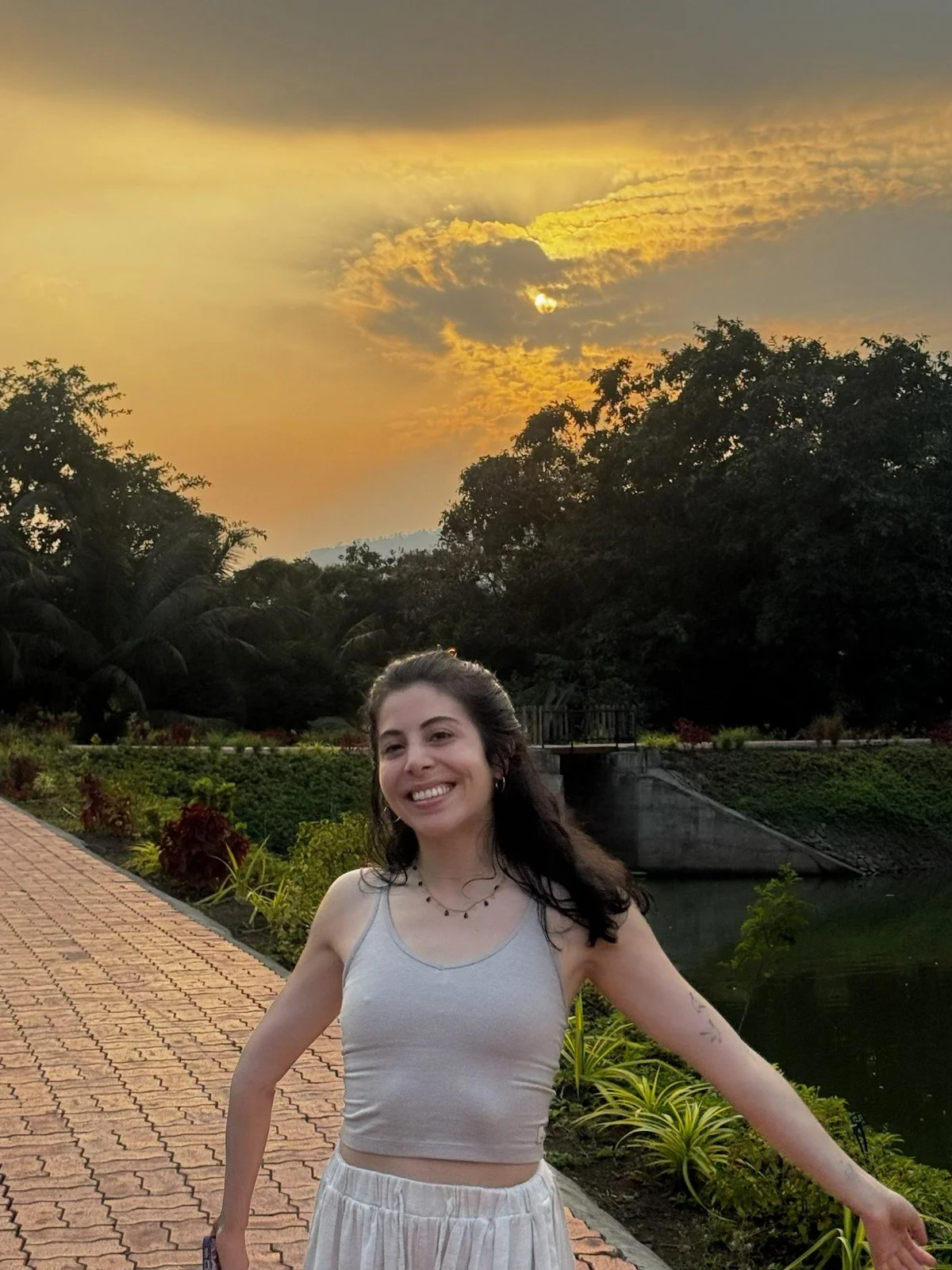
India in January
Kat Capossela, contributor
It’s officially been a month away from New York, and I have never felt more at home in myself. The weight of being seen has been lifted. Now, from a little coastal town in Kerala, there’s nowhere to be, no one to see. I’m finally, finally, in no rush. I can take my time to read, to write, to wander, to be still. It’s nothing short of glorious.
I’ve spent three weeks at Govardhan Ecovillage studying Bhakti yoga, where, every day for hours, I studied the Bhagavad Gita with monks in orange robes, chanted sacred mantras alongside loving devotees from across the world, and soaked in the pure Godly energy of the space created by Radhanath Swami, an otherworldly man who has touched my heart and proven to me, just through his existence, that God is real and can be found.

A few dozen of us travelled to Mumbai for a few days to attend a flower festival, dip our toes again in the material world, and give our brains a break from intense Bhakti philosophy. Many continued on their religious pilgrimage to Mayapur, but I went south to be alone for a few days in Kochi.
Of course, whether I try to be or not, I’m never alone. A nice person I met at a Vipassana meditation retreat in July was also on holiday here; the extraverted hostel owner took delight in touring me around the quaint town on his scooter; and everyone has been eager to strike up a conversation with a young American woman.
In fact, my struggle to be alone expedited my need for it. So I’m soon headed five hours north to learn Ayurvedic cooking at a retreat center for two weeks. Hopefully it will just be me and the vegetables.
After Bhakti yoga in Mumbai and Ayurvedic cooking in Kerala, I’ll head off to study Osho’s form of meditation in Pune, advanced yoga in Rishikesh, and Buddhism in Dharamshala. It’s all a tentative plan, which will likely take me through March, where I’ll decide if travelling to Thailand, Vietnam, and possibly Bali would still feel right.
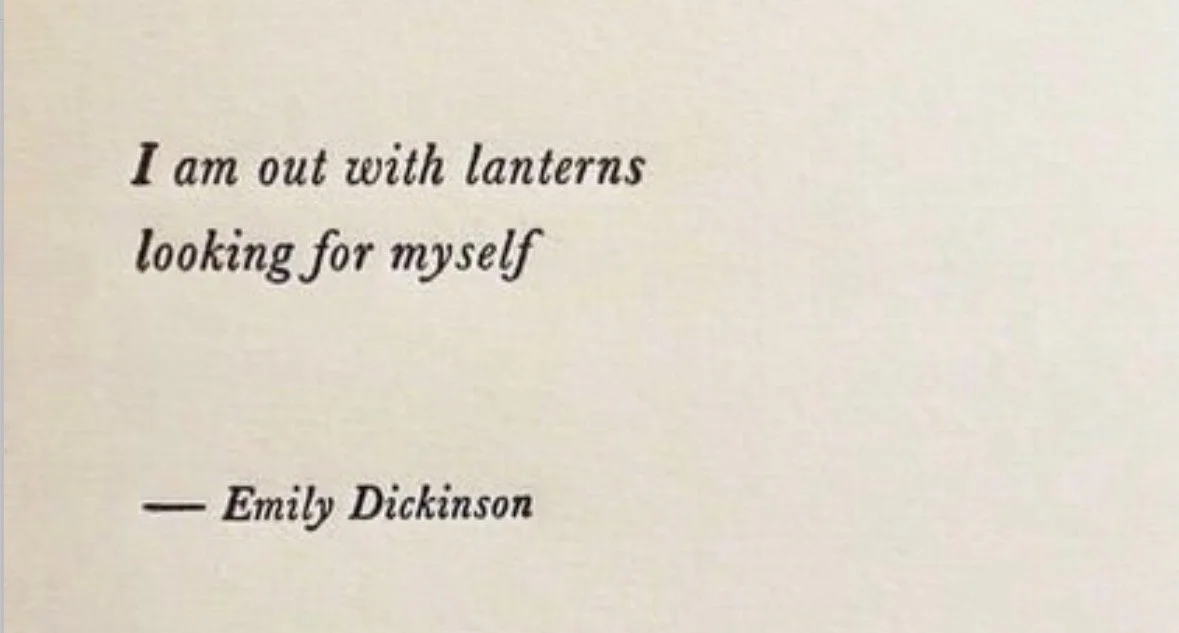
I’ve been shocked with how grounded I feel in myself here. I’m not wide-eyed to make new friends or itching to experience all the flashiest touristy adventures. Waking up slowly, taking myself to a cafe, roaming around with kirtan in my Airpods, and treating myself and a friend to a $5 dinner has been enough for the past week.
Although I’m still fumbling around my spiritual path, I can’t help but yearn for Bhakti. Nothing calms me like the sound of the Maha mantra. Nothing makes me believe in the divine like the grace of Radhanath Swami. And the philosophy, rooted in deep humility and absolute love for this world and its maker, might be the reason I am feeling so stable in this inherently unrooted moment of my life.
I’m still thinking of all my teachers here, to whom I’ll forever be in debt: Zita, my wild and beautiful Belgian best friend who first planted the seed of devotion in my heart and showed me true female love; Stine, a gorgeous former corporate lawyer-turned famous ceramicist and Bhakti babe who took me under her wing during the most turbulent period of my life; Gopinath, the sincere young monk who spent hours with me under a coconut tree answering my skeptical questions about God, and for whom I’ll always carry a deep fondness.
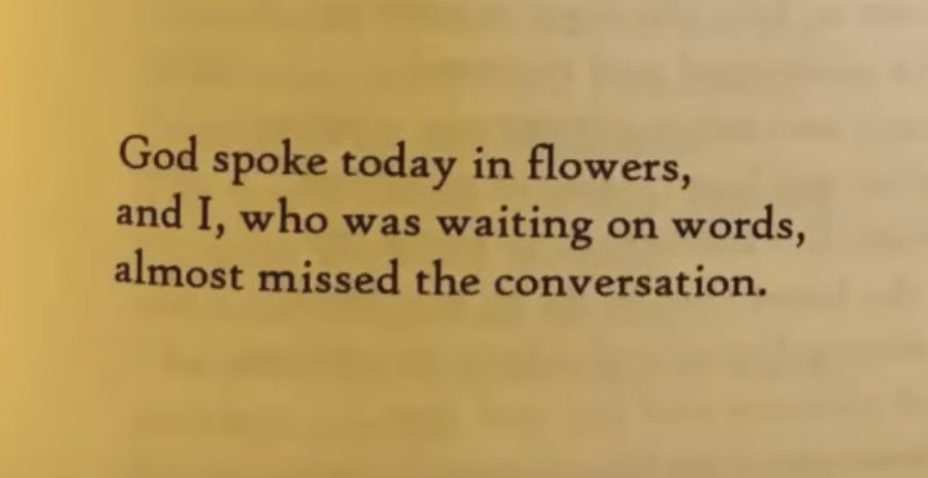
Back in New York, I’m thinking of Craig, the embodiment of equanimity and grace whose level tempered, unconditional compassion continues to stun me; Nirav and Rakhee, the couple who’ve quietly guided and supported me throughout so many years, offering their loving relationship as my north star; and William, whose unparalleled goodness and love I’ve never deserved and has been nothing short of my biggest blessing. Not to mention my dad in Boston, my mom in Arizona, and my brothers across the country.
These are the best people anyone will ever be blessed to meet, and yet, here I am, with a whole army of guides behind me. How could I ever feel alone?
I’ve come to India to find my spiritual center, to learn to truly love myself, and to discover how I can best serve the world. It’s remarkable how quickly these learnings are unveiling themselves to me. They’re calling me to go more inward, devote my energy a bit more pointedly, and recognize the extraordinary people who brought me to this place. We never do anything alone, even if we might like to think so.
I thought I had to get stronger to get myself through this moment in my life. Really, I have to get softer. To lay down my arms and surrender. And I know the saturation of compassion, wisdom, and selfless care I’ve somehow received, throughout my entire life, will forever support me in this continual trust fall. I am forever grateful.
______________
Tucker’s Corner
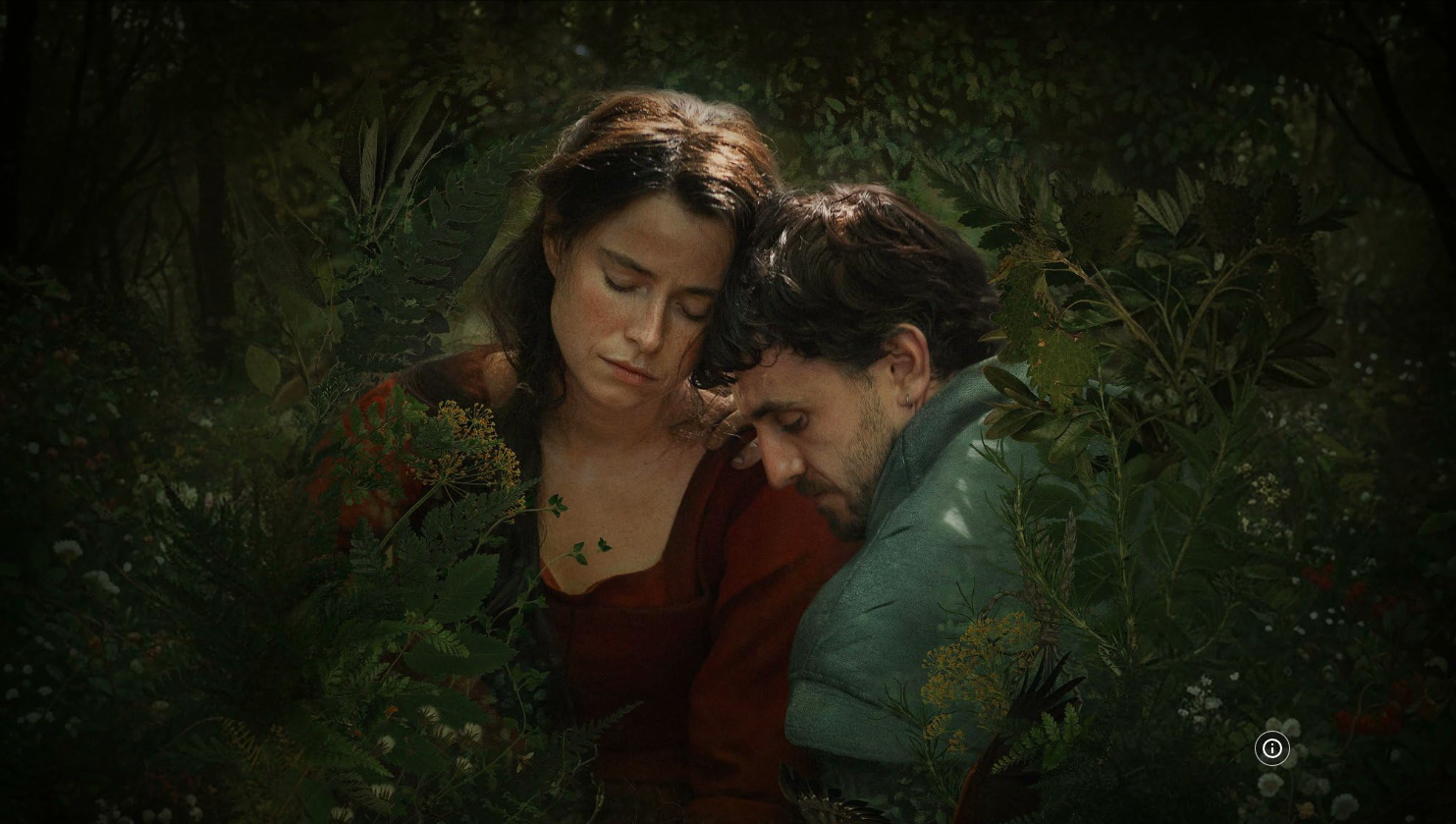
Hamnet
We know next to nothing about William Shakespeare’s only son, Hamnet, other than the fact that he and his twin sister Judith were born sometime in 1585 and that he was buried in August of 1596, 11 years later. Even the cause of death is unknown, though the deaths of young children were not entirely uncommon at the time; three of William’s own sisters had died in childhood. Understandably, the scarcity of our insight into the life of Hamnet and his family has inspired writers and artists over the years to fill in the details with their own imaginings. As an opening quote from Shakespeare scholar Stephen Greenblatt reminds us, in both Maggie O’Farrell’s haunting 2020 novel Hamnet and Chloé Zhao’s new adaptation of it: “Hamnet and Hamlet are in fact the same name, entirely interchangeable in Stratford records in the late sixteenth and early seventeenth centuries.” Which means we know one more thing about this boy: A few years after his death, his father wrote maybe the greatest play in the English language, and it bears his name.
Hamnet is devastating, maybe the most emotionally shattering movie I’ve seen in years. Going into a film about the death of a child, one naturally prepares to shed some tears. Still, I did not really expect to cry this much. That’s not just because of the tragic weight of the material, but because the picture reimagines the poetic act of creating Hamlet. Shakespeare’s play sits on the highest shelf, fixed by the dust from centuries of acclaim. It is about as unimpeachable as a work of art can be. And yet, here is a movie that dares to explore its inception. The attempt itself is noble, and maybe a little brazen; that it succeeds feels downright supernatural.
Hamnet remains mostly faithful to the novel (O’Farrell collaborated with Zhao on the screenplay), but the two works center on different parts of the imagined timeline. The book ends with our first glimpse of Hamlet, and its final words belong to the Ghost of the play: “Remember me.” The film, on the other hand, directly grapples with the connections between real life and art, showing how the play (and his own role in it) became a vessel for Will Shakespeare (Paul Mescal) to confront his sorrow and help bring his wife Agnes (Jessie Buckley) out of hers. Hamlet is thought of, not incorrectly, as a work about vengeance and the conflict between thought and action; indeed, it was Shakespeare’s version of an already-existing and popular revenge play. But in shifting her focus, Zhao fully embraces something long evident but often overlooked: As reworked by Shakespeare, Hamlet is also a play about all-consuming grief, one driven at all levels by loss and guilt and questions of how to properly mourn.
It’s a fascinating subject to imagine, but how exactly does one tell a story mired in such unspeakable sadness? Hamnet speculates that the child was a victim of bubonic plague, but it approaches the tragedy with a kind of magical realist sensibility. In this telling, the constitutionally weaker Judith (played by Olivia Lynes in the film) is the one who initially gets sick, and the loving and industrious Hamnet (Jacobi Jupe), who often traded clothes with her as a game to fool their parents, makes one final sacrifice, pretending to be his sickly twin sister and thereby drawing the disease out from her and into himself. Transference is thus at the heart of this story — narratively, formally, structurally.
Zhao’s film, unlike the novel is linear, doesn’t dwell as long on the details of the death itself. Instead, its breathless, queasy energy sweeps us along. Aided immeasurably by Max Richter’s score, Zhao finds melancholy not in stillness and reflection but in movement and activity. We see how young Will, a sensitive and shy Latin tutor, first met the headstrong Agnes, once a child of nature dismissed as “a forest witch” and raised by an uncaring step-mother. Buckley, an actor who can be both ethereal and earthy at the same time, makes an ideal choice for Agnes. This is a woman who doesn’t quite belong in the world and yet seems to have emerged out of its very soil. She loves to lurk in the woods with her pet hawk, she is proficient in herbs and remedies, and she possesses the gift of foresight. Despite her reluctance to get married, Agnes has already seen that at her deathbed she will be surrounded by two children. But she has already had a daughter, Susanna, before Judith and Hamlet arrive, so the eventual birth of three children terrifies her to the core.
Will, the “pasty-faced scholar” hounded for his meekness, sees and loves Agnes for who she is, but marriage and a family also mean a taming of her wild spirits. They are kindred souls: He too can work dark magic, just with his words. Zhao suggests that even though Will was rarely home, his family life fed his art. We see the kids doing the witches’ opening incantations from Macbeth, and of course Hamnet and Judith’s cross-dressing and play-acting echo the plots of many a Shakespeare comedy. All this could come off as corny, but the family is depicted with such loving specificity that we buy all of it. Many historians have been perplexed by how such a seemingly simple man as Shakespeare could have written works of such grandeur and depth. So here, then, is a home filled with wonder and play that could have inspired some of it.
Which, of course, compounds the tragedy. Agnes might have access to certain powers, but she can’t bring Hamnet back. Neither of them can. “He can’t have just vanished,” Will says. “All he needs is for me to find him. He must be somewhere.” His wife simply responds, “We may never stop looking for him.” But the film has already shown us where Hamnet is. As he hovers between life and death, we see a vision of the young boy wandering around a makeshift forest that is clearly a theater backdrop. He then steps into the dark void of a door at stage center, from which Will Shakespeare himself will later emerge, cloaked in white powder, playing the ghost of Hamlet’s murdered father. The undiscovered country is art itself.
We sometimes forget what a phenomenal actor Mescal is. This is probably because he hasn’t made a good action hero yet, which is a scarlet letter in our day and age. But also, we love to quantify, classify, and dilute complicated performers into simple impressions; despite the fact that he’s only been acting in movies for five years, we think we already know what he’s all about. With his unexpected choices in both cadence and affect, he’s something closer to a young Christopher Walken. In Hamnet, his response at the first sight of his dead son represents some of the best acting I’ve ever seen; it’s matched later when he interrupts a rehearsal of Hamlet’s “Get thee to a nunnery” speech and delivers it himself with such snarling self-loathing (“I could accuse me of such things that it were better my mother had not born me!”) that he instantly and convincingly reinterprets the world’s most famous play before our very eyes. Agnes accuses Will of not grieving enough, but Mescal makes sure we see that oceans of pain lie beneath his hesitancy: He is Hamlet. And yes, we do get to see the actor as William Shakespeare reciting Hamlet’s “To be or not to be” soliloquy in this movie, one of two very different interpretations of the same speech that Zhao presents, as if to acknowledge that everyone has their own Hamlet.
It won’t spoil anything to say that Hamnet concludes with a staging of Hamlet, one in which the play’s twisted reflection of the poet’s life becomes more evident and gains complexity. Perhaps the greatest compliment I can pay Zhao is that this recreation of such a familiar work still manages to surprise, because we see it through Agnes’s disbelieving eyes. The drama onstage doesn’t just echo and explain Will’s sorrow, it also serves as a kind of lifeline to Agnes — and when we view Hamlet as an effort by one grieving person to reach out to another, the whole thing opens up in magnificent new ways. There are references to other stories coursing through Hamnet, and one of them is the myth of Orpheus and Eurydice, which Will tells Agnes during one of their first meetings. It’s a tale of resurrection, passion, and art, and how one final longing glance traps a lover in the underworld forever. As presented here, it doesn’t apply in any schematic or obvious way to the drama of Shakespeare’s life. But it does underline a fundamental truth in both Hamnet, and Hamlet: that to see and be seen is a joyous and terrifying thing.
____________________
Chuckles and Thoughts

___________________________
Lisa’s Neck of the Woods
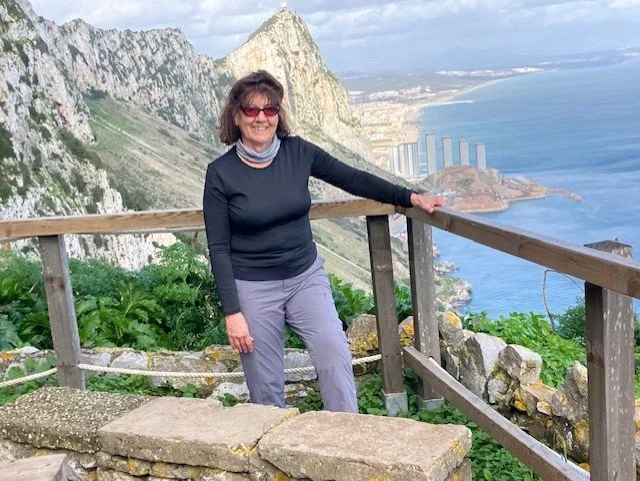
Finding the sublime in Spain
The editor warned me not to write a travelogue of my European Grand Tour, which includes Portugal, Spain, Gibraltar, Morocco, Sicily, Sardinia and mainland Italy. Yes, it is a lot of places and we saw a lot of sites along our way. Once we crossed into Spain, we planned a route that covered most of the Andalusian region with a detour to Tangiers Morocco and then all the way up the coast to Barcelona. I could write tons about each place but he’s in my head asking for specific events that had an impact on me beyond the usual oohing and aahing Gothic and medieval architecture and lovely wrought iron balconies.
I have a fear of heights that stems from a childhood incident where my siblings pretended to push me into the ocean off a sea wall in Quincy. I can’t stand on the edge of anything without my heart stopping. Well, let me tell you something; it’s amazing how I could face that fear numerous times while here in Europe for the opportunity to witness the sublime! We climbed church towers in Faro and Sevilla, stood at the edge of Alhambra turrets, and braved the Mediterranean steps of the Rock of Gibraltar, all in the pursuit of sublime panoramic views of oceans and cities. Gibraltar was absolutely terrifying because the steps are on the edge of the rock and quite uneven. But it’s as close to heaven as I’ll ever get, since I won’t climb Mt. Everest because it’s too cold up there.
Sevilla is a sublime place and one that doesn’t get the respect that it deserves. Every where we went, I found myself almost in tears from the beauty I witnessed. We booked a flamenco show in a historic intimate venue, and I looked forward to the entertainment. There was a guitarist, two singers, and a man and woman flamenco dancers. A simple stage, no food or drink to detract from the performance, lights dimmed and magic! The dancers moved so gracefully and were physically so in control of their bodies, that I was mesmerized and started crying. The emotional wailing in the songs, the guitarist’s skill and the improvised dance steps to sync with the music was pure joy! The dancers were top performers in Flamenco and it showed though their skill and physical control of their bodies when they gracefully moved and tapped on the wooden floor. Bravo!
As a tip of the hat to the editor, we booked a reservation at a Bib Gourmand Michelin restaurant for some authentic Valencian paella in the birthplace of the famous dish. Arroceria Maribel is located in a small seaside town called El Palmar just outside of Valencia. I had to order the paella in advance when I made the reservation, as it takes time to cook it and should be prepared properly so as to enhance the flavors. A true Valencia paella is made with rabbit and chicken, so that’s what we ordered. The staff was amazing and welcoming to us, and we happily whetted our appetite with slow cooked pork belly brioche with Chinese cabbage and prawns in a pastry shell. When the waiter brought out our pan of paella, I was in ecstasy! It’s always been a favorite of mine, as is risotto (I like rice!). The paella was real and it was magnificent. I didn’t think we had it in us to eat the whole pan, but we rallied and made it happen. When the bill came, we thought there was a mistake. Suffice it to say that in the US, you could easily triple it for a middling paella.

Flamenco venue

Performers
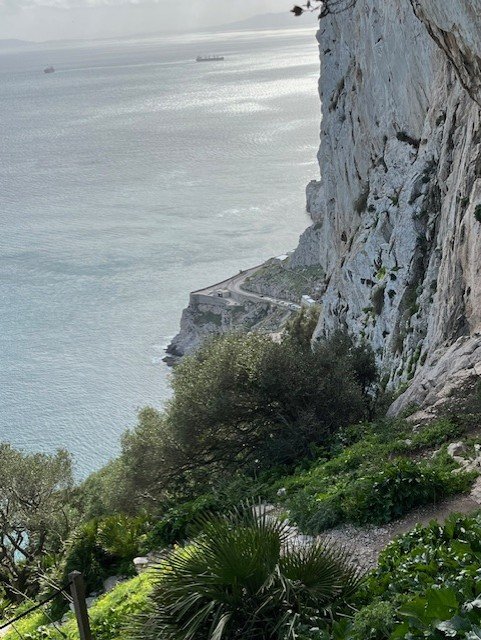
Just a little uphill!

Valencia paella!
__________________
Six Word Stories
Letter unopened. Secrets sealed. Time passed.
Those three lines sketch a whole emotional landscape in miniature. The author is pointing toward the weight of something left untouched — a truth, a confession, a reckoning — and how time quietly transforms it.
“Letter unopened.” A message exists, but it hasn’t been faced. Avoidance, fear, or self‑protection sits in that sealed envelope.
“Secrets sealed.” Whatever is inside isn’t just paper — it’s something the speaker has chosen not to confront. The secrecy becomes its own character.
“Time passed.” The delay becomes the meaning. What was once urgent has aged into something heavier, maybe sadder, maybe safer, maybe too late.
Together, the lines suggest that silence has consequences, and that what we avoid doesn’t disappear — it simply waits, gathering emotional gravity.


Vermeer, Johannes - Woman reading a letter - ca. 1662-1663
Johannes Vermeer - Unknown source
The central element of the painting is a woman in blue standing in front of a window (not depicted) reading a letter.[4] The woman appears to be pregnant, although many have argued that the woman's rounded figure is simply a result of the fashions of the day.[5] Although the woman's loose clothing may be suggestive, pregnancy was very rarely depicted in art during this period.[6]
While the contents of the letter are not visible, the composition of the painting is revealing. The map of the County of Holland and West Friesland[7] in the Netherlands on the wall behind the woman has been interpreted as suggesting that the letter she reads was written by a traveling husband.[8] Alternatively, the box of pearls barely visible on the table before the woman might suggest a lover as pearls are sometimes a symbol of vanity.[9] The very action of letter-reading reflects a thematic pattern throughout Vermeer's works, as a common private moment becomes revealing of the human condition.[10]
The painting is unique among Vermeer's interiors in that no fragment of corner, floor or ceiling can be seen.[11]
_________________
Last Comment
On their opening drive, Seattle marched down the field and scored 3.
Surprisingly, I did not feel a feel of disappointment.
As the game progressed, a match between unmatched teams, I found it easy to accept Seattle’s superiority.
The Pats played out their first year discovering their imperative next moves in rebuilding the team. Discovering their greatest needs.
Next season will find us with a superior Pats team.
Of course, other teams will also improve.
What makes competition fun.
Nice year, my football team friends.
Wait till next year.
!!!!!!!!!!!!!!!!!!!!!!!!!!!!!!!!!!!!!!!!!!!!!!!!!!!!!!!!!!!!!!!!!!!!!!!!!!!!!!!!!!!!!!!!!!!!!!!!!!!!!!!!!!!!!!!!!!!!!!!!!!!!!!!!!!!!!!!!!!!!!!!!!!!!!!!!!!!!!!!!!!!!!!!!!!!!!!!!!!!!!!!!!!!!!!!!!!!!!!!!!!!!!!!!!!!!!!!!!!!!!!!!!!!!!!!!!!!!!!!!!!!!!!!!!!!!!!!!!!!!!!!!!!!!!!!!!!!!!!!!!!!!!!!!!!!!!!!!!!!!!!!!!!!!!!!!!!!!!!!!!!!!!!!!!!!!!!!!!!!!!!!!!!!!!!!!!!!!!!!!!!!!!!!!