

______________________________________
Tucker’s Cover: January 4, 2026
# 1747
__________________________
Thoughts from Dom’s Porch: New Year’s

Despite all warnings on fine particulate matter it is still use in Germany to celebrate the onset of the new year with fireworks on New Year's Eve. This holds true also for the year 2018 to come in the small upper Swabian village Eberhardzell near Biberach an der Riss.
Andreas Weith - Own work
__________________________
More Thoughts from Dom’s Porch: Celebration of Lfe
Responses to loss vary widely, often involving a complex mix of sorrow, loss, reflection, resilience, and sometimes, even relief.
From Wikipedia:
A growing number of families choose to hold a life celebration or celebration of life event for the deceased. Like memorial services, this ceremony is held after burial, entombment or cremation of the deceased. An urn can be on display with flowers and photos on the altar after cremation like in a memorial service. Unlike funerals, the focus of the ceremony is on the life that was lived.[93] Such ceremonies may be held outside the funeral home or place of worship; country clubs, cemetery chapels, restaurants, beaches, performing arts centers, urban parks, sports fields, hotels, civic centers, museums, hospital chapels, community centers, town halls, pubs and sporting facilities are popular choices based on the specific interests of the deceased. Celebrations of life focus on including the person's best qualities, interests, achievements and impact, rather than mourning a death. Some events are portrayed as joyous parties, instead of a traditional somber funeral. Taking on happy and hopeful tones, celebrations of life discourage wearing black and focus on the deceased's individuality. An extreme example might have "a fully stocked open bar, catered food, and even favors." Notable recent celebrations of life ceremonies include those for René Angélil and Maya Angelou.

The burial of a bird
____________________
More Thoughts from Dom’s Porch: Programmed Aging
Aging in humans represents the accumulation of changes in a human being over time and can encompass physical, psychological, and social changes. Reaction time, for example, may slow with age, while memories and general knowledge typically increase. Of the roughly 150,000 people who die each day across the globe, about two-thirds die from age-related causes.
Programmed aging is the idea that aging is not just wear‑and‑tear, but instead a genetically regulated biological process—a kind of built‑in timetable that causes organisms to age in predictable ways. According to evolutionary biology sources, programmed aging suggests that aging is genetically controlled, not purely random damage. It may involve hormonal changes, gene expression patterns, or neuroendocrine signals that shift as organisms move through life stages.
However, many biologists argue that aging is not programmed, because evolution rarely favors traits that reduce an individual’s survival. A major review concludes that claims of specific “aging genes” don’t hold up under scrutiny. The mainstream view is that aging results from declining natural selection with age, not a deliberate biological program.

An elderly man
Ahmet Demirel - Self-photographed
_____________
Tucker’s Corner
Sentimental Value
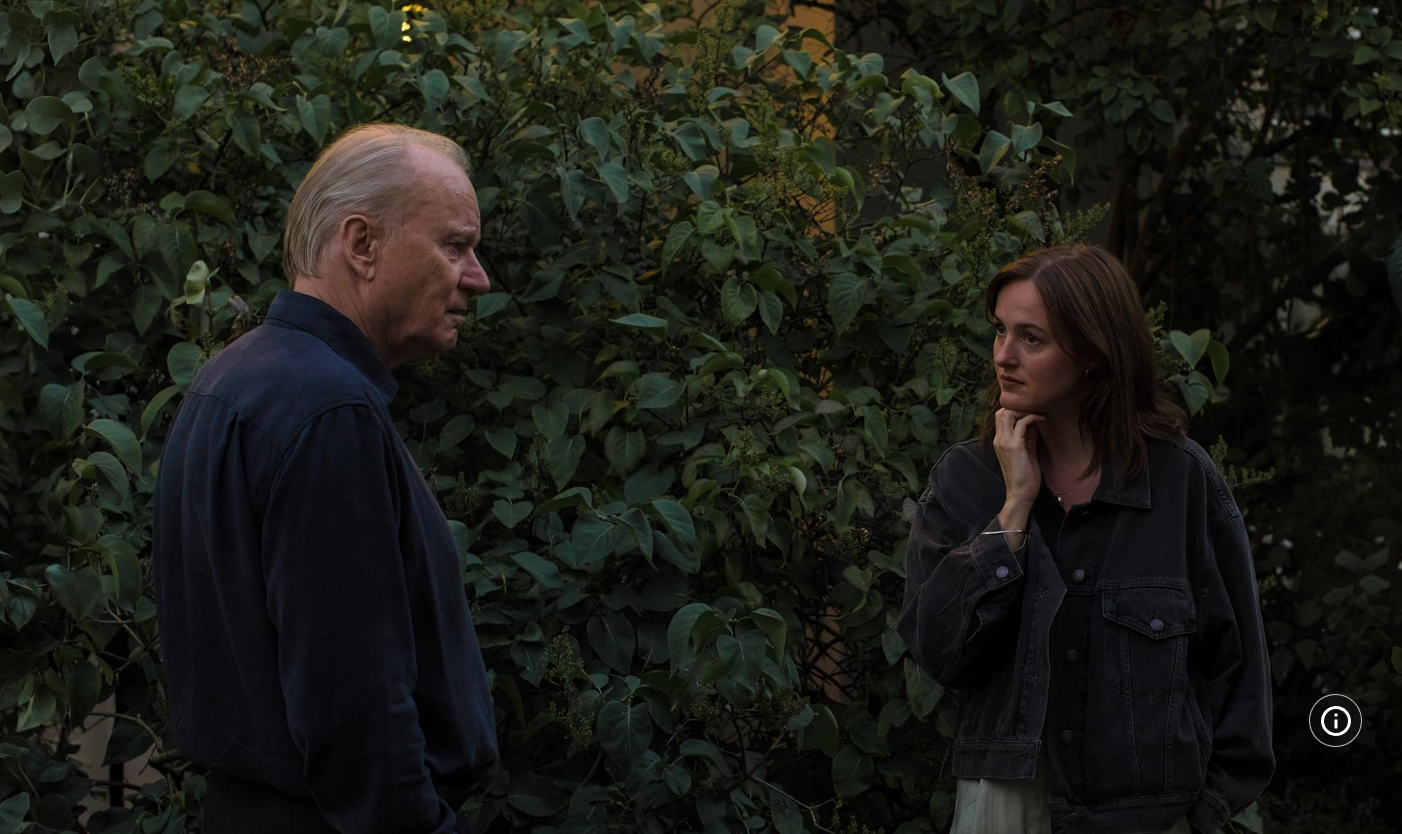
You can never truly know your parents. And Norwegian actor Nora Borg (Renate Reinsve) is happy to keep it that way in regard to her father, Gustav (Stellan Skarsgård). A world-renowned filmmaker, he chose his career over domesticity and being present in her life ages ago; Nora and her sister, Agnes (Inga Ibsdotter Lilleaas), have been estranged from him for years. Dad came and went as they were raised by their mom in an Oslo residence that’s been in the family for generations. From the outside, the place looks like like something out of a fairy tale, where a witch in the woods might plump up kids for a meal. But inside, it’s roomy yet cozy, a homey domicile filled with both bright memories, a rich history, and the faint echoes of a decades-old tragedy.
When Nora and Agnes’ mother dies, the siblings gather friends and loved ones in the home for a memorial. No one expects Gustav to attend. No one is happy to see him when he shows up, acting as if he’s merely been absent without leave for a fortnight or two. Even more surprising: Dad has an offer for Nora, who’s just come off a successful run in an avant-garde theatrical production. After a long creative dry spell, he’s finally written a new, very personal script. Would she star in it?
Nora says no way. Gustav accepts her answer and says goodbye. Some time later, Dad shows up once more at their house. He plans on shooting his latest opus there regardless of Nora’s refusal. Gustav has also cast a way-more-famous American movie actor named Rachel Kemp (Elle Fanning) to play the lead. The young A-lister met the older auteur at a film festival, and her sudden interest in the project equals funding. It’s not a coincidence that Gustav has forced Rachel to dye her hair to resemble his daughter. Nor that a major incident in the script mirrors the same aforementioned tragedy that occurred within these four walls, back when this lion in winter was just a boy.
The lines between life and art, truth and fiction, get mighty blurry in Trier’s emotionally expansive, extremely wry film, though the family drama itself is just a spine on which to hang any number of other fixations and preoccupations. You can break down this skateboarding champ turned major cinema figure’s best work into bare-bones synopses, and people will have a vague sense of what they’re walking into. Reprise, his 2006 debut, centers on two aspiring, competitive writers. Oslo, August 31st (2011), follows a man determined to take his own life. The Worst Person in the World (2021), which starred Reinsve and more or less turned her into one of those “overnight” sensations that feel like showbiz mythology, is a character study of a complicated woman. All of this is completely accurate.
What makes Trier’s movies so rich, so exhilarating, so vital, is the way he and his longtime screenwriter Eskil Vogt pitch these stories somewhere between a saga and an anecdote, fit-to-burst with lifelike textures, details and detours. This is part of Sentimental Value‘s prime currency. We don’t just get a tour of this old house — we meet it, hearing its thoughts courtesy of a school essay Nora once wrote (“what the house disliked more than noise was silence”) and watching its history unfold in vignettes that span WWII to the late 1980s. There are glimpses of a backstage farce, with Nora trying to use a quickie with her married stage-manager lover to quell a panic attack on opening night, then threatening to bolt.
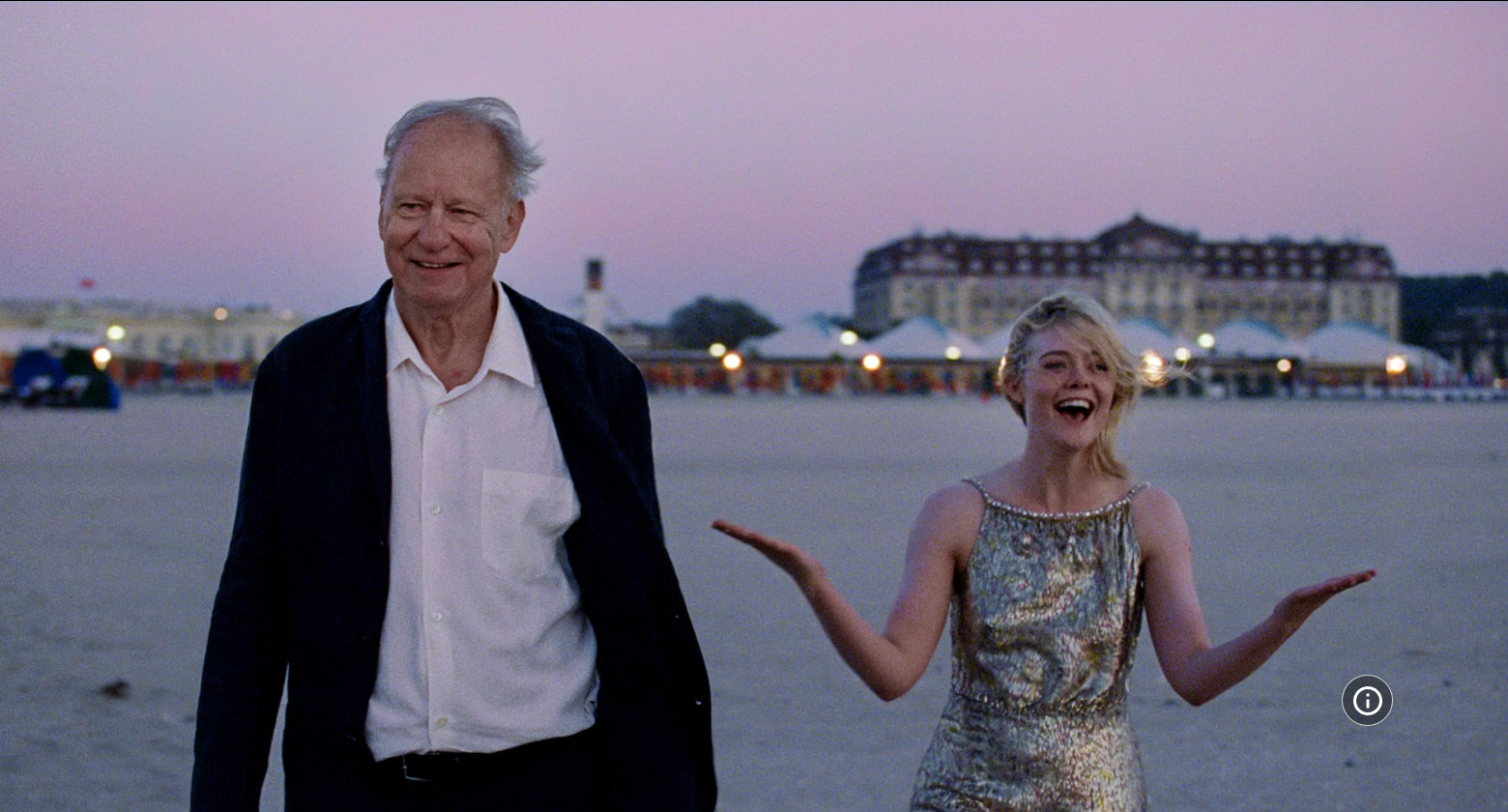
Press junkets get satirically raked over the coals. So does Netflix, “TikTok trolls,” vapid Hollywood entourages and good old-fashioned arthouse narcissists. Both Lilleaas and Fanning add their own touches, with the latter once again reminding you that she’s one of best screen listeners working today. If there’s an opportunity for a stylish montage or a moody sequence set to a chic needle-drop — say, Roxy Music’s “Same Old Scene” or the soulful, increasingly popular “Nobody Knows” as done by the Youth for Christ choir — Trier will drop that needle posthaste. There’s formalism to burn here.
But all of the side business and genre flirtations remain at the service of coloring the characters, so loving and flawed and searching and messed-up. Which is why, when you watch Trier and Vogt’s genuine, humanistic take on artistic freedom versus adult living — and the way consequences reverberate — you realize you’re getting something far more difficult to classify than just “dysfunctional parent drama.” Sentimental Value is essentially a double act between Skarsgård and Reinsve, and these two performers play off each other in a way that’s recognizable to anyone who’s struggled with paternal baggage, by which I mean everybody. It’s also using the prickly dynamic between father and daughter to explore how storytelling can both mask hurt and facilitate healing, and doing so in a way that goes way beyond heroes and villains. Not even a meta ending that pushes that idea to its logical breaking point can sour you on it. What you’re left with is one the best movies about how family means always having to say your sorry — and why, in the end, it’s better to forgive than forget.
____________________
Chuckles and Thoughts

______________
Six Word Stories
Hands touched. Eyes met. Futures collided.
AI interprets:
Those three short sentences are doing a lot of work — they’re a compressed emotional arc. The author is using minimal language to signal a moment of instant connection that feels bigger than the people involved.
Here’s what each line is doing:
“Hands touched.”
A physical moment — small, accidental, or tentative. It’s the spark.
“Eyes met.”
A shift from physical to emotional recognition. This is where awareness enters the scene. Two people actually see each other.
“Futures collided.”
This is the leap: the moment feels so charged that it alters the trajectory of both lives. Not literally, but symbolically — the author is saying: This tiny moment changed everything.
Put together, the author is describing a flash of connection so powerful it feels like destiny, using three clipped, rhythmic beats to mimic the suddenness of the experience.

Hellelil and Hildebrand, the meeting on the turret stairs, by Frederic William Burton
The subject of the painting is the love story of Hellelil, who falls in love with her bodyguard Hildebrand. When her father hears of it, he sends her seven brothers to kill Hildebrand. The painting depicts the moment before Hildebrand goes out to meet the brothers, kissing Hellelil one last time, and parting with the injunction to "say never my name". Hildebrand subdues each brother until he comes to the youngest; then Hellelil, forgetting his request, calls to him to plead for mercy; as Hildebrand complies, the youngest brother kills him. Said brother takes Hellelil back to their house by dragging her from his horse, tortures her, and locks her up in a tower for many days, eventually selling her for a church bell. Hellelil tells this story to a Danish Queen in whose service she is, before falling down dead herself
_____________________________________
Lobster Fra Diavolo
For 2
Heat 3 cups of tomato sauce.
Put the live lobsters into the freezer for 15 minutes then remove. This will numb them to the pain.
Dispatch the two 1.5 lb lobsters by stabbing the knife point into the underside of the lobsters’ eyes, slicing to shell enough to expose the sac. Pull it out and discard.
Put the lobsters into the tomato sauce and simmer for 15 minutes.
Remove the cooked lobsters and allow them to cool for 20 minutes.
Break them apart.
Remove the meat from the tails and claws and reserve the meat.
Remove the coral, mash it into a bit of the sauce and reserve.
Remove and emulsify the tomalley by whisking it together with 1 cup of tomato sauce.
Stir it into the Lobster Gravy.
Return all the shells to the gravy, the ones with meat and the empty one.
Cook the shells for ten-minutes extracting all the flavor from the shells.
Remove the gravy from the heat and discard the empty shells.
Taste the gravy.
Season it to taste with fresh parsley, tarragon, and basil.
Add a bit of salt if needed.
If the sauce tastes thin or sharp add ½ tablespoon of butter or a teaspoon of olive oil or a touch of marrow fat if you’re feeling bold.
Add some chili flakes for a little heat.
Add 1–2 teaspoons of white wine or a squeeze of lemon. This wakes the whole dish up.
Whisk the mashed coral [roe) into the pot.
After tossing the pasta in some of the sauce, plate the pasta twirling it into a tight, vertical nest in the center of the plate.
Spoon the lobster‑rich sauce around and over the pasta.
Add on the lobster meat, placing the hero pieces on top of the pasta nest.
Yummy.

__________________________________
Last Comment
I don’t remember a lovelier Christmas. My daughter was visiting she woke up to her yoga workout at Equinox while I meandered to Planet Fitness and lifted weights. We met up at George Howell Café and had another lovely conversation, coffee, and online time. Then we went home and had a wonderfully leisurely afternoon before going to Zuma at 5.00pm. We had a great table, ordered the omakase dinner, and had a thoroughly elevating evening.
Happy Christmas, Happy New Year’s.
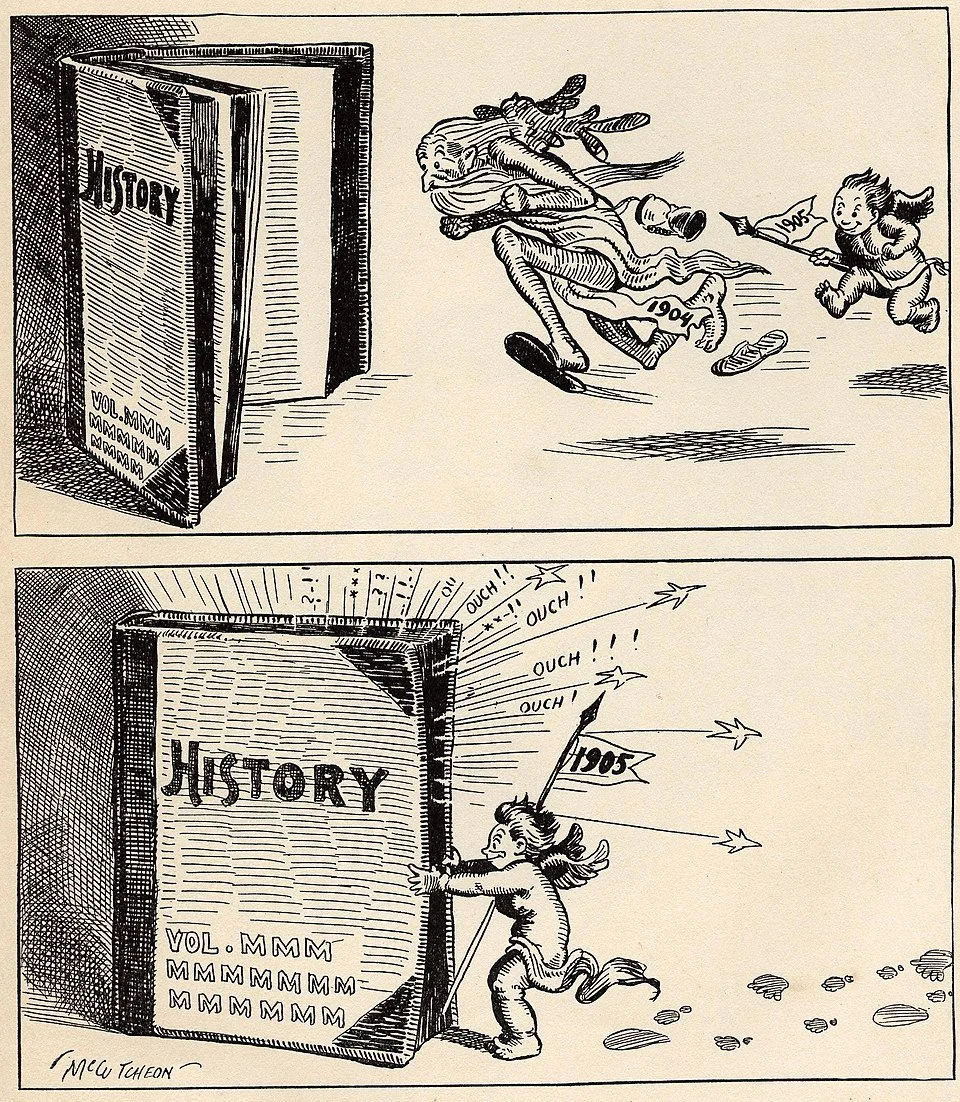
Baby New Year 1905 chases old 1904 into the history books in this cartoon by John T. McCutcheon.
John T. McCutcheon - The Mysterious Stranger and Other Cartoons by John T. McCutcheon, New York, McClure, Phillips & Co. 1905.
Cartoon showing baby representing New Year 1905 chasing old man 1904 into history.
!!!!!!!!!!!!!!!!!!!!!!!!!!!!!!!!!!!!!!!!!!!!!!!!!!!!!!!!!!!!!!!!!!!!!!!!!!!!!!!!!!!!!!!!!!!!!!!!!!!!!!!!!!!!!!!!!!!!!!!!!!!!!!!!!!!!!!!!!!!!!!!!!!!!!!!!!!!!!!!!!!!!!!!!!!!!!!!!!!!!!!!!!!!!!!!!!!!!!!!!!!!!!!!!!!!!!!!!!!!!!!!!!!!!!!!!!!!!!!!!!!!!!!!!!!!!!!!!!!!!!!!!!!!!!!!!!!!!!!!!!!!!!!!!!!!!!!!!!!!!!!!!!!!!!!!!!!!!!!!!!!!!!!!!!!!!!!!!!!!!!!!!!!!!!!!!!!!!!!!!!!!!!!!!