
Sweet
__________________________________
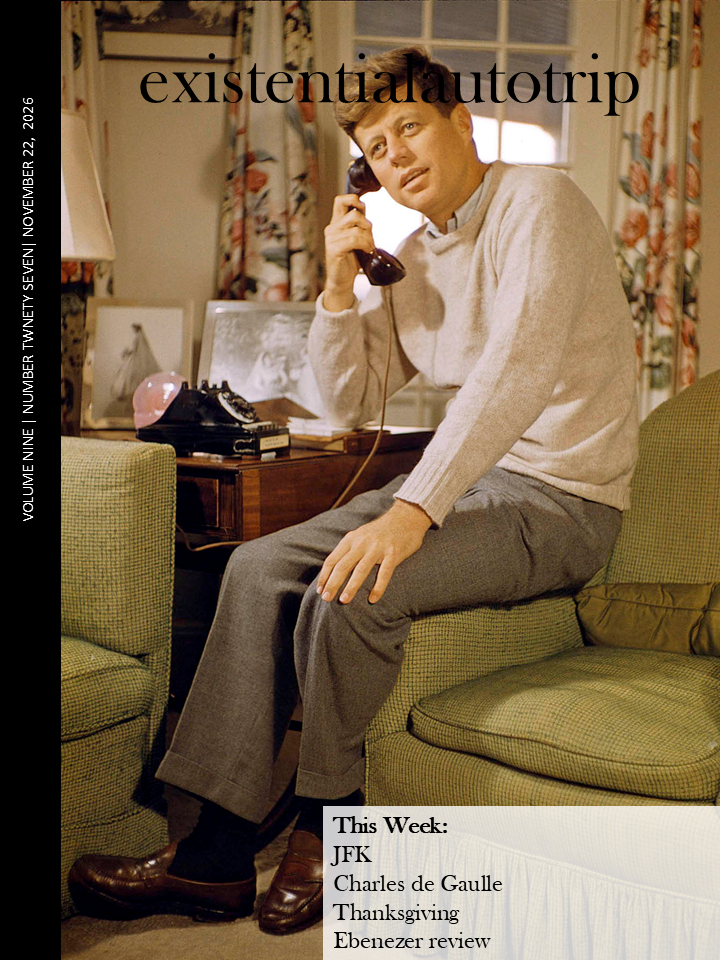
Tucker’s November 22, 2026 cover
# 1794
__________________________________
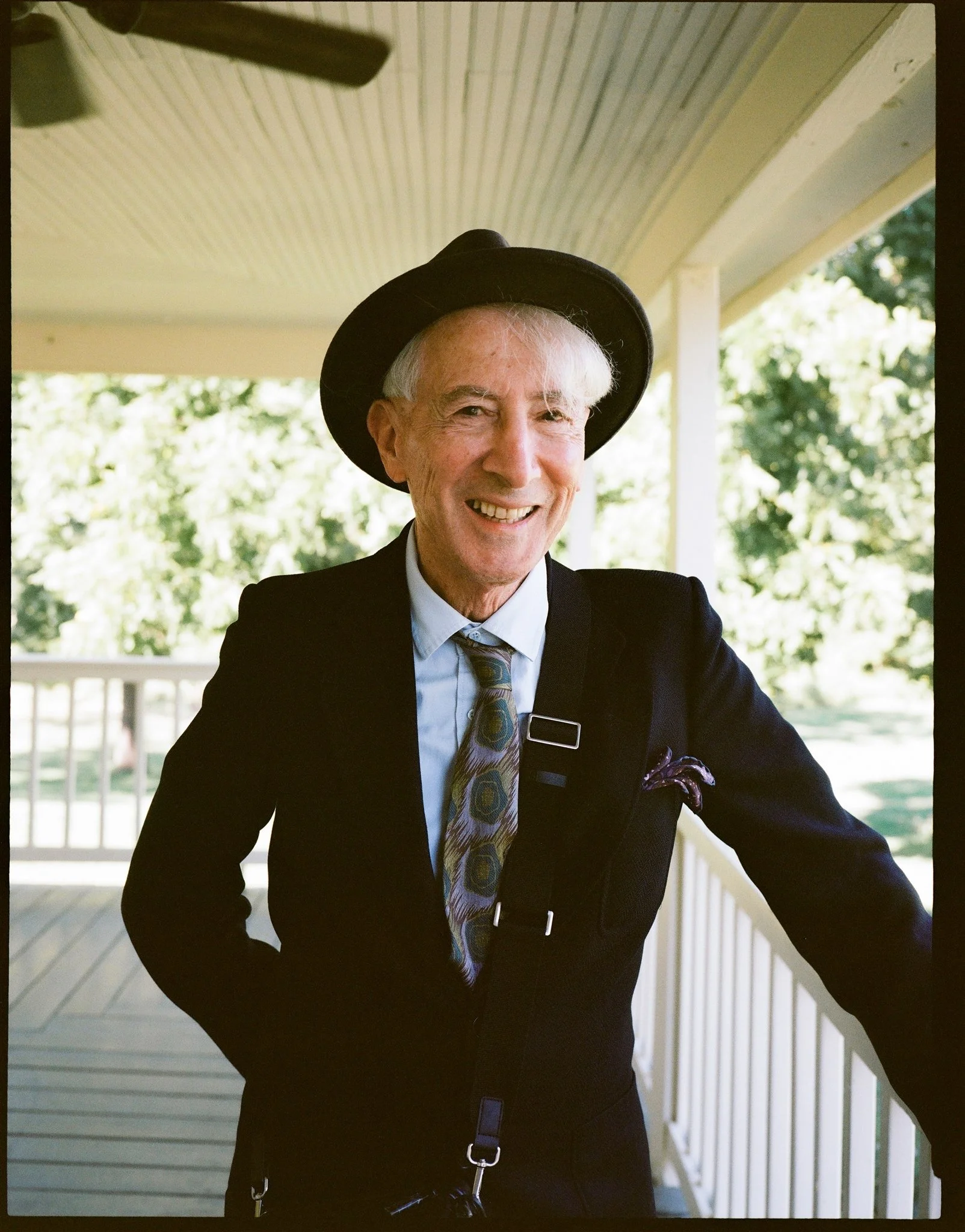
Thoughts from Dom’s Porch
John F. Kennedy's presidency lasted less than three years.
But in that short time span he imbued the country with an enthusiastic optimism he called the New Frontier.
Through eloquent speeches, ("ask not what your country can do for you,") he inspired many Americans to embrace public service and civic responsibility. His administration became associated with the spirit of the “New Frontier," a vision of national renewal, scientific progress, and international leadership.
The Kennedy assassination in Dallas on November 22, 1963, shocked the nation and transformed him into a symbol of youthful promise interrupted.
Internationally, he smoothed relations with our southern neighbors, engineering the Alliance for Progress, a vast aid and development program designed to promote economic growth, social reform, and democratic stability throughout Latin America, countering the appeal of communism.
He created The Peace Corps, sending young American volunteers abroad giving this idealism form.
He pledged to land a man on the Moon before the decade ended, a vast scientific effort.
Sadly, he didn’t live to see 1969 and the success of that mission.
He is credited with a masterful handling of the Cuban Missile Crisis in 1962, combining naval quarantine with secret negotiation he forced the removal of Soviet missiles from Cuba and avoided nuclear war.
Following this protracted confrontation, he eased Cold War tensions by establishing a direct "hotline" with Moscow and negotiating the Limited Nuclear Test Ban Treaty.
At home, his record was unfinished. He proposed tax cuts and a civil rights bill, sent federal troops to enforce desegregation, and spoke eloquently about racial justice.
His assassination froze him as a symbol of lost promise, and his successor used that legacy to pass much of his program.
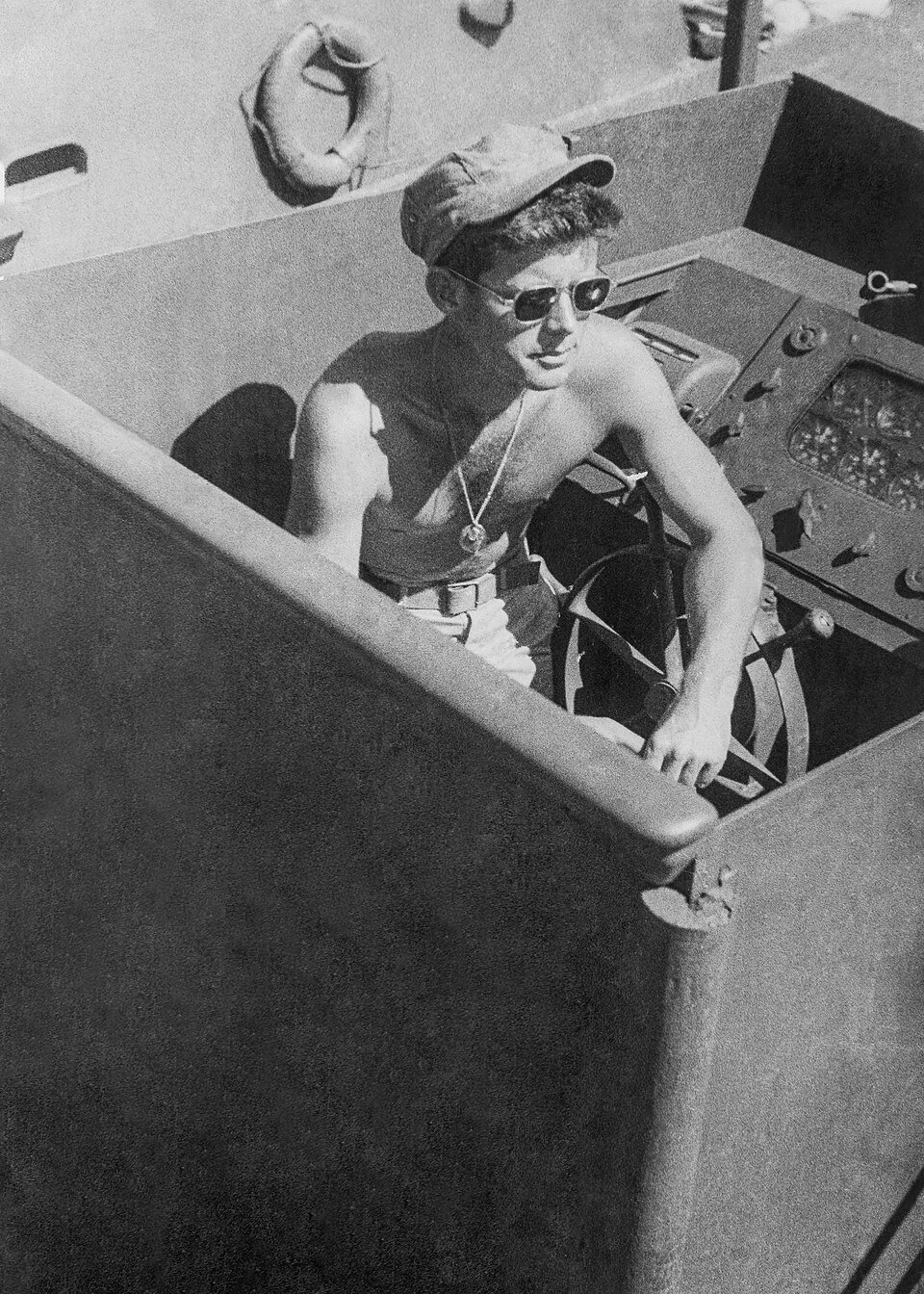
Kennedy on his navy patrol boat, the PT-109, 1943
U.S. Navy photo - This tag does not indicate the copyright status of the attached work. A normal copyright tag is still required. See Commons:Licensing.
Lt. John F. Kennedy aboard the PT-109 in the South Pacific, 1943.
__________________________________
More Thoughts from Dom’s Porch
Charles de Gaulle was born in Lille on November 22, 1890, into a patriotic, religious (Roman Catholic) and intellectually minded family that instilled in him a deep sense of duty to France.
Trained as an army officer, he served with distinction during the First World War and developed ideas about modern warfare that often put him at odds with military orthodoxy.
His defining moment came in 1940, when France fell to Nazi Germany. Refusing to accept defeat, de Gaulle escaped to London and, through his famous Appeal of June 18, urged the French people to reject Marshal Philippe Pétain surrender to Germany, continue the struggle because they lost the battle but not the war,
At first, de Gaulle had almost no resources. He possessed no territory, no army, and little political support. Yet as French colonies in Africa, overseas territories, resistance networks, and military units gradually rallied to him, he became the recognized head of Free France. Over the course of the war he transformed this loose movement into a provisional government-in-waiting.
After years of political turmoil, de Gaulle returned to power in 1958 amid the Algerian crisis and established the Fifth Republic, creating the strong presidential system that still governs France today.
He served as president from 1959 to 1969, and pursued an independent foreign policy, pulling France out of NATO's command, building its nuclear deterrent, and vetoing Britain's entry into Europe — twice.
de Gaulle remains one of the towering figures of modern French history.
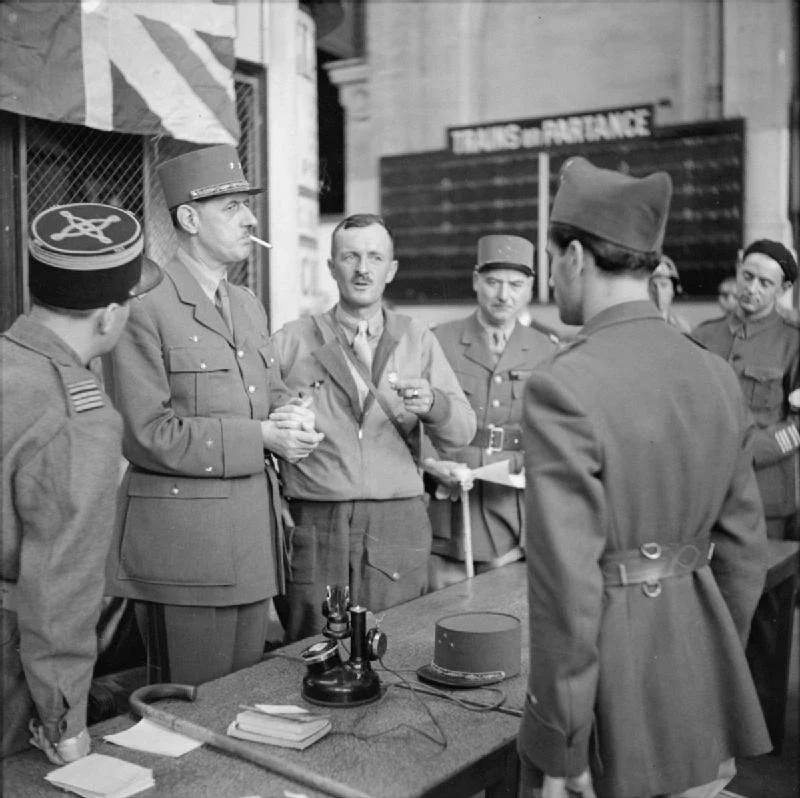
General de Gaulle with General Leclerc and other French officers at Montparnasse railway station in Paris, 25 August 1944
Malindine (Capt), Hardy (Sgt), No. 5 Army Film and Photographic Unit - http://media.iwm.org.uk/iwm/mediaLib//49/media-49769/large.jpg This photograph BU 158 comes from the collections of the Imperial War Museums.
The Campaign in North-west Europe 1944-45 General De Gaulle with General Leclerc and other French officers at Montparnasse railway station in Paris, 25 August 1944.
__________________________________________
Even More Thoughts from Dom’s Porch
THANKSGIVING
Since 1941 Thanksgiving has been fixed to the fourth Thursday in November.
On that day we set out family tables, connect with football, join a parade, and pause for gratitude.
We compose the menu and create a guest list.
We cook.
The day itself is an annual reunion distinguished by miles traveled, number of chairs unfolded, and side dishes offered.
Marked by a rare suspension of ordinary time: no work emails received and by highways that take us to familiar doorsteps.
Delightful conversations are detailed.
Most faces around the table are familiar but often change from year to year.
Last year’s children are closer to becoming adults.
Some of this year’s celebrants are new.
Some past celebrants leave empty places that we feel if we don’t see.
Thanksgiving asks little beyond presence.
The turkey may be perfect or dry, the game exciting or forgettable, the weather clear or stormy.
What matters is the brief agreement to stop counting what is missing and notice what remains.
Tomorrow is another event, closer to normal, but today, Thanksgiving, is a moment when we are consciously aware of our quality of life.
These few shared hours are priceless, and we know it.
Unless you are alone. Then, pain.
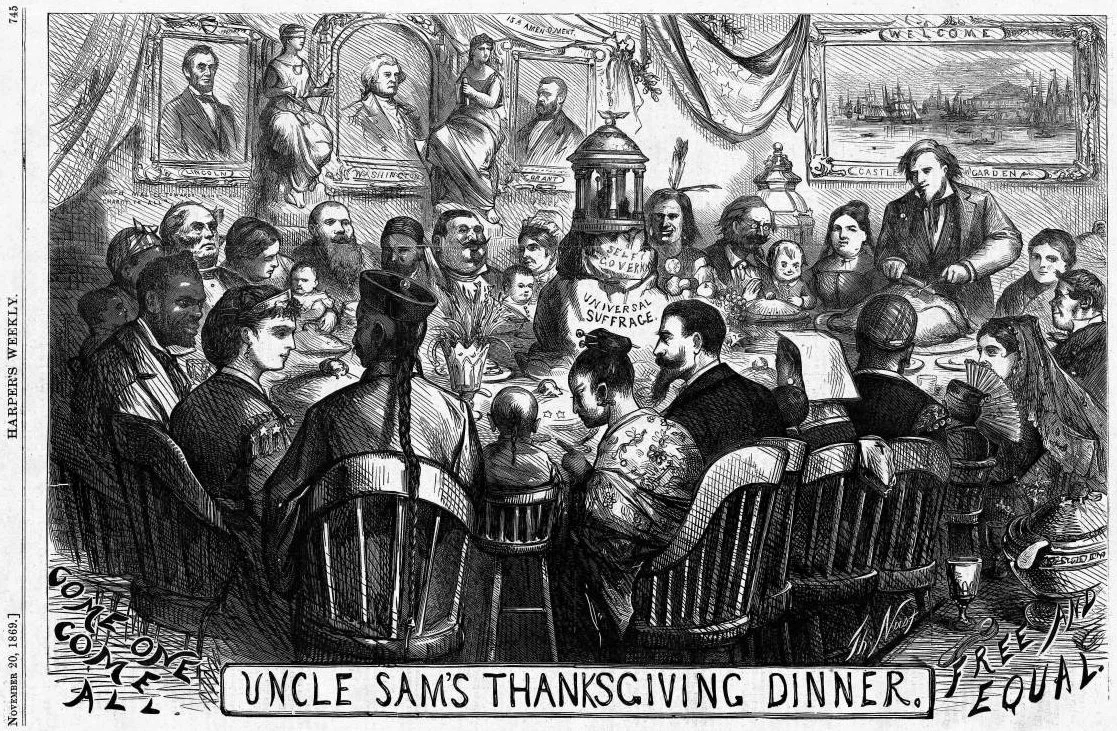
Thomas Nast's vision of immigrants seated in harmony around America's Thanksgiving table mirrors Sara Josepha Hale's desire to Americanize immigrant populations through the adoption of the holiday.
Thomas Nast - https://deadconfederates.files.wordpress.com/2010/11/unclesamsthanksgiving.jpg https://www.nytimes.com/learning/general/onthisday/harp/1122_big.html
Uncle Sam's Thanksgiving Dinner (November 1869), by Thomas Nast.
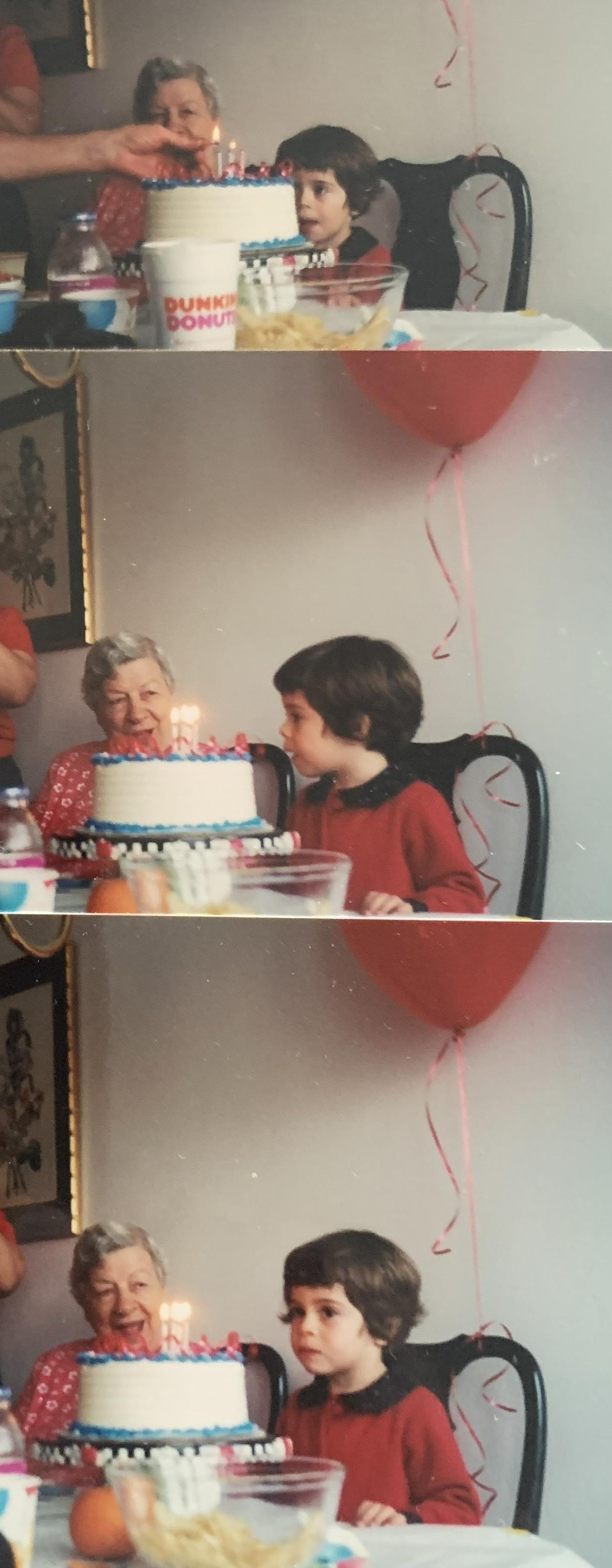
its my mother.
but who’s that kid?
my son Chris or daughter Kat?
Photo compliments of dear and long-standing friend, Cindy O.
_________________________________
Tucker’s Corner
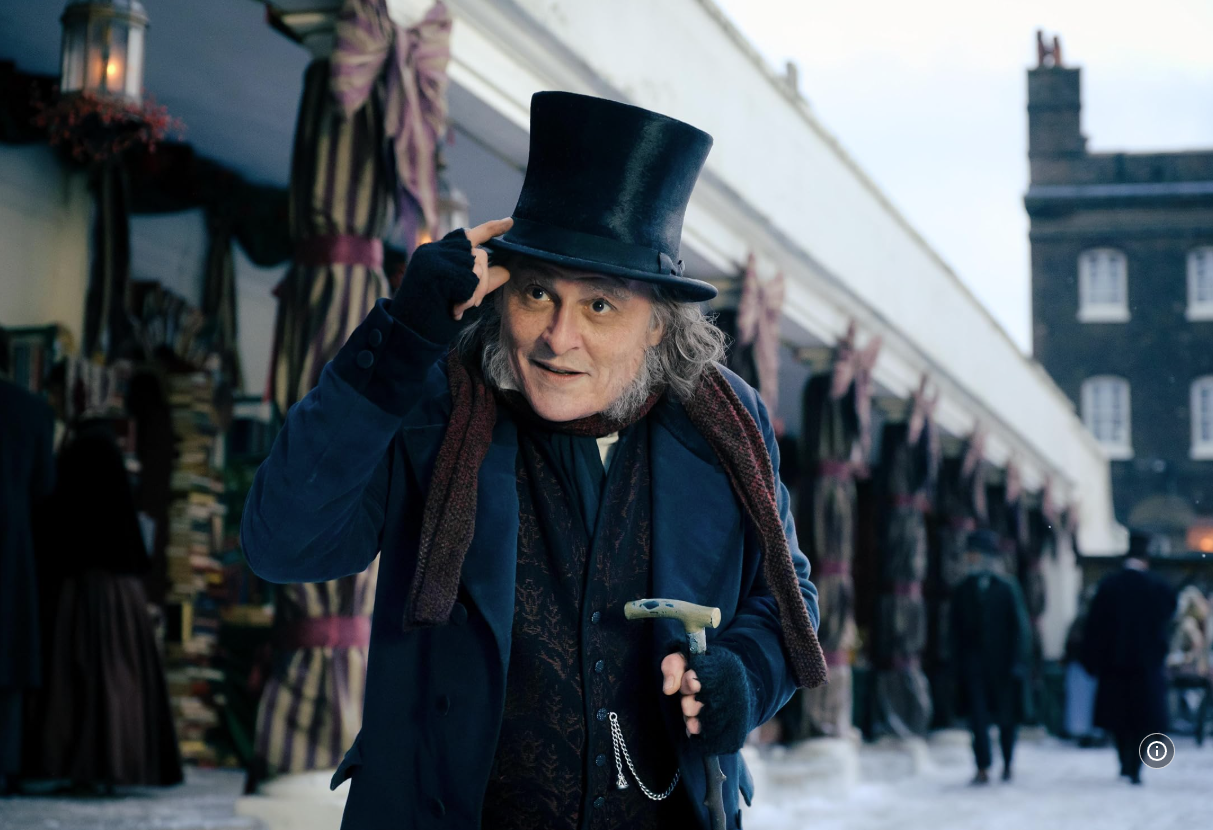
Ebenezer
“Ebenezer,” horror auteur Ti West’s adaptation of “A Christmas Carol,” doesn’t reinvent cinema, much less Charles Dickens. But it would be dishonest to claim it isn’t skillfully done, in a retro-classical style. It has a measured tone and steady pace. It’s funny and sometimes touching. It connects with the audience, in a basic way that US cinema seems to have largely forgotten how to do. And although West tamps down his usual splatterhouse gusto to appeal to a family audience, he still pushes Dickens’ innate sense of the horrific right up to the edge of an “R” rating. The ghosts reminded me of the ring wraiths in Peter Jackson's Lord of the Rings trilogy. Maybe too scary for young viewers. West’s grindhouse and Giallo flourishes—especially the J-horror visions of Ignorance and Want as embryonic ghouls in the Ghost of Christmas Present’s ribcage—will make them want to sleep with the lights on through spring.
These elements and others complicate what might otherwise have been an easy critical takedown of a film that does indeed look—from the outside, anyway—like the opening act in a redemption tour for its reputationally-impaired leading man, Johnny Depp. That it’s good enough to take seriously makes Depp’s presence as both an artistic collaborator and a marketing point even more annoying, because it means what’s least interesting (or integral) to the film’s success keeps pulling focus from the rest.
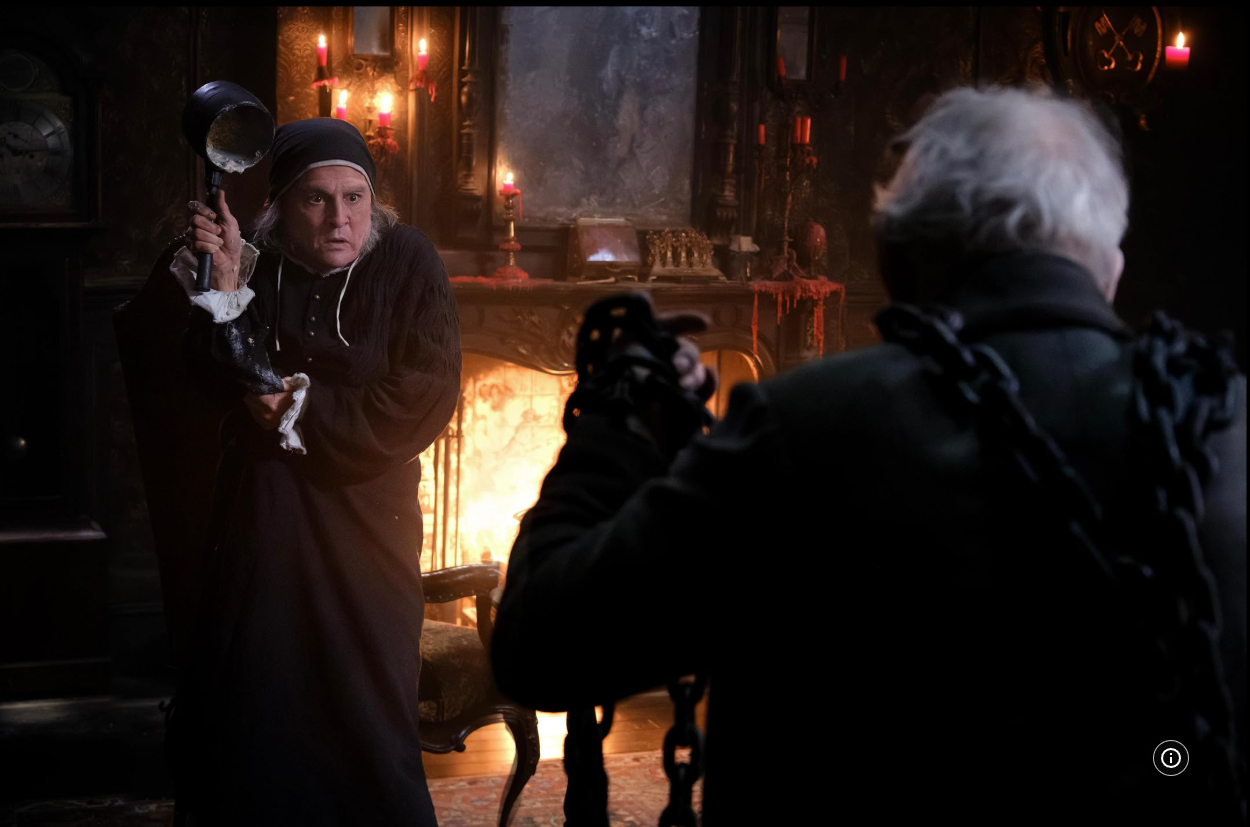
It’s not that Depp’s technique is objectively terrible. It’s that of all the topline talent deployed around him, he’s the weakest in terms of imaginative resources. His standard Marlon-Brando-in-latex bag of tricks is wrong for a work of such delicacy, almost like mischievous sabotage of a film that doesn’t deserve such disrespect. His screen partners all play things straight while Depp sputters, minces, flinches, bugs his eyes, growl-giggles, and otherwise carries on around them. It’s as if you’re watching Mike Myers playing Austin Powers playing Johnny Depp playing Ebenezer Scrooge. It’s West’s fault if this is what he asked for, and Depp’s if it wasn’t.
If the film’s first major mistake was casting Depp, the second was casting Ian McKellen opposite Depp as Scrooge’s business partner and soon-to-be chain-rattling accuser Jacob Marley. From the flashback opening to Scrooge and Marley taunting beggars and charity collectors and otherwise humbugging it up on Christmas Eve through the post-mortem hauntings in Scrooge’s house, with a chastened, regretful Marley telling Scrooge he’s being tortured in the afterlife because “I failed to honor the time I was gifted,” McKellen is so strong that he wipes Depp off the screen. In fact, if you’re a McKellen superfan, or an anyone-but-Depp advocate, it may be difficult to watch any scene after McKellen’s exit without thinking about what a superior Scrooge he would’ve made, at any point in the last 30 years. In any case, a devil’s bargain has been made here, whether or not the filmmakers thought of it that way.
The rest of the cast eclipses Depp handily. West trusts three of the four ghost performers to let acting carry most of their role’s weight, which is appropriate considering that this adaptation, unlike so many others, gives you a sense of who the ghosts were as people. With her skinny frame, angular face, and doll’s eyes, Andrea Riseborough is one of the best Christmas Pasts in film history. She’s aided greatly by full-body corpse makeup that lets her act alongside the leading man without the need for splashy, big effects. Her eerie, oddly beautiful screen presence sits somewhere between an ‘80s-era movie specter (think “Raiders of the Lost Ark” and “Poltergeist”) and one of those tragic 1930s Universal horror film monsters who’s more sinned against than sinning.
Tramell Tillman’s Ghost of Christmas Present is yet another version of that character as a pagan giant with a holly wreath and woolly robe, but the actor animates him with a burly, hearty, bloke’s-bloke energy. When Scrooge happens upon him feasting in a pub, his joyful machismo gives the movie a jolt of energy just as it starts to flag. Only the bony-fingered, Grim Reaper-ish Ghost of Christmas Future disappoints, because it’s a variation on designs you’ve seen before. But at least there’s a delightfully revolting image at the end of its segment.
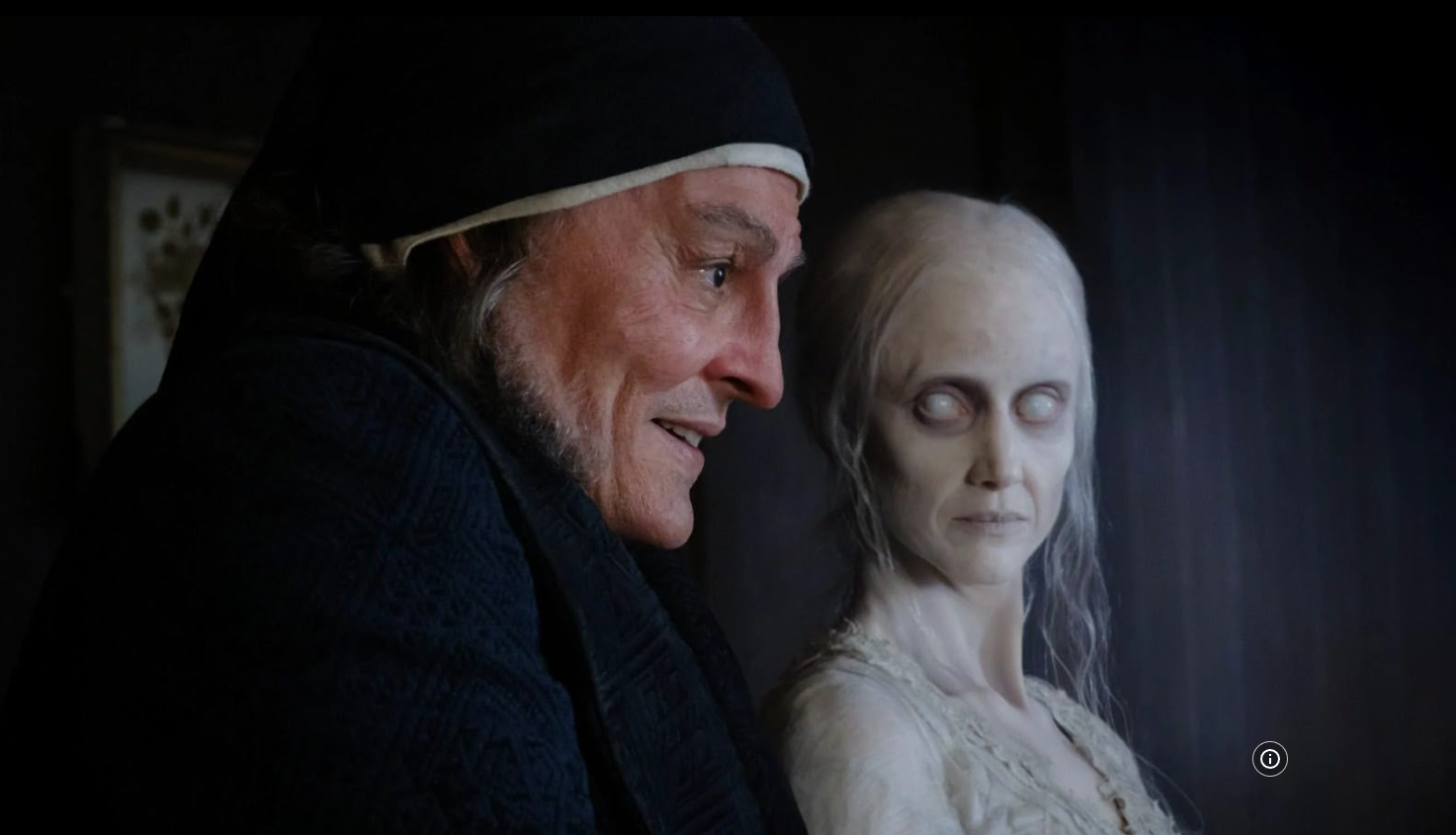
Some early criticisms of the trailer insisted that “Ebenezer” would be a two-hour apologia for Scrooge, in the vein of “Wicked,” “Maleficent,” “Cruella,” and other films where a villain is made-over as a misunderstood antihero with good reasons for turning antisocial. “Ebenezer” is that, kind of, but only because the text of “A Christmas Carol” got there first.
The literary Scrooge, like West and Depp’s version, also had a sister who died young. This helps explain how coldly he treats his good-hearted nephew Fred (Sam Claflin), whose face reminds him of the only person who loved him unconditionally. The movie reimagines Belle (Ellie Bamber), the should’ve-been wife of the deluded, money-grubbing young Ebenezer, as a budding socialist and future novelist who began working in a soup kitchen after their breakup. Although the original text merely had her marry someone else and become a great wife and mother, the other details aren’t superimposed “wokeness,” but embellishments congruent with other Dickens stories. And they’ve been deployed in many other adaptations, including the 1951 version, which has long been considered the gold standard.
Besides, Dickens’ book was never a simplistic fable about a rich monster turning sweet after ghosts terrorize him. It’s a cautionary tale of a man who let money gradually suffocate his human potential, and an affirmation of the belief that even the worst can repent and work toward redemption. The movie probably overdoes it by showing Scrooge not only giving a street urchin money to buy the largest goose in the window and dropping in on the Cratchits to bestow gifts but also addressing every disturbing fact and scenario he learned throughout the night. It gets to the point where it starts to feel like the movie sight-unseen detractors believed it would be. But it’s mostly on solid footing, psychologically and theologically.
Between the dreamy gauziness of the film stock, the mostly practical creature effects (with digital touch-ups), West’s restrained (for him) direction, Nathaniel Halpern’s thoughtful script, the top-shelf production values, and the obsessively analog-era visual grammar (this movie loooves shaky zoom shots), it’s a ship-in-a-bottle art object that’s bigger than most ships. The opening sequence even employs a mid-20th century, hand-lettered “spooky” typeface and retro Paramount Pictures logo and lists the movie’s release date as MMLXXVII. Though it’s barely started, it has already announced itself as old-fashioned entertainment. And it delivers.
As for Depp as the film’s weakest link: his off-screen awfulness is relevant to this critique. It speaks to the way Hollywood allows abusive men to endlessly redeem and remake themselves, partly by citing the old canard that we should let people keep whatever artistic stature they attained before they were exposed as slimebags, because dreadful behavior, abuse, and worse are a small price to pay for transcendent art.
Even if that were true, Depp’s performance is far from transcendent. Its chief virtue is that it’s just effective enough not to wipe out the excellence around him. That’s not a victory worth bragging about. Worse, such thinking absolves the audience of responsibility for the careers their money and attention help sustain. Political and economic upheavals notwithstanding, in the end, we get the cinema we demand. And as Dickens wrote, “Men’s courses will foreshadow certain ends, to which, if persevered in, they must lead. But if the courses be departed from, the ends will change.”
_________________________________
Chuckles and Thoughts

_______________________
Six Word Stories
He taught me silence. I learned.
⭐ Core meaning
A lesson in silence, fully absorbed. Whether the teacher offered quiet as wisdom or withheld words as punishment, the student mastered it. The story's power is that it never tells you which — and it doesn't need to.
⭐ Emotional layers
Ambiguity at the center: gift or wound? The sentence refuses to say, and the refusal is the point.
The flat finality of "I learned" — no rebellion, no unlearning attempted, just absorption.
Inheritance: the teacher may be gone, but the silence stayed behind like furniture.
Self-recognition: I became what was modeled for me.
⭐ Tone
Not angry, not forgiving — stark. Two short sentences like two headstones. What it is not: sentimental, explanatory, pleading for the reader's sympathy. What it is: a verdict delivered without appeal, in the fewest possible words.
⭐ Deeper implication
He didn't lecture; he demonstrated. Day after day, the quiet at the table, the things unsaid. And I — dutiful student — took it in until it was mine. Now I can't tell where his silence ends and mine begins. I learned too well.
⭐ Why it resonates
Everyone was taught something they didn't choose — a father's temper, a mother's worry, a house where feelings went upstairs unspoken. The concrete image: a boy watching a man who never says what he feels, practicing in the mirror of him year after year until the silence fits like a handed-down coat.
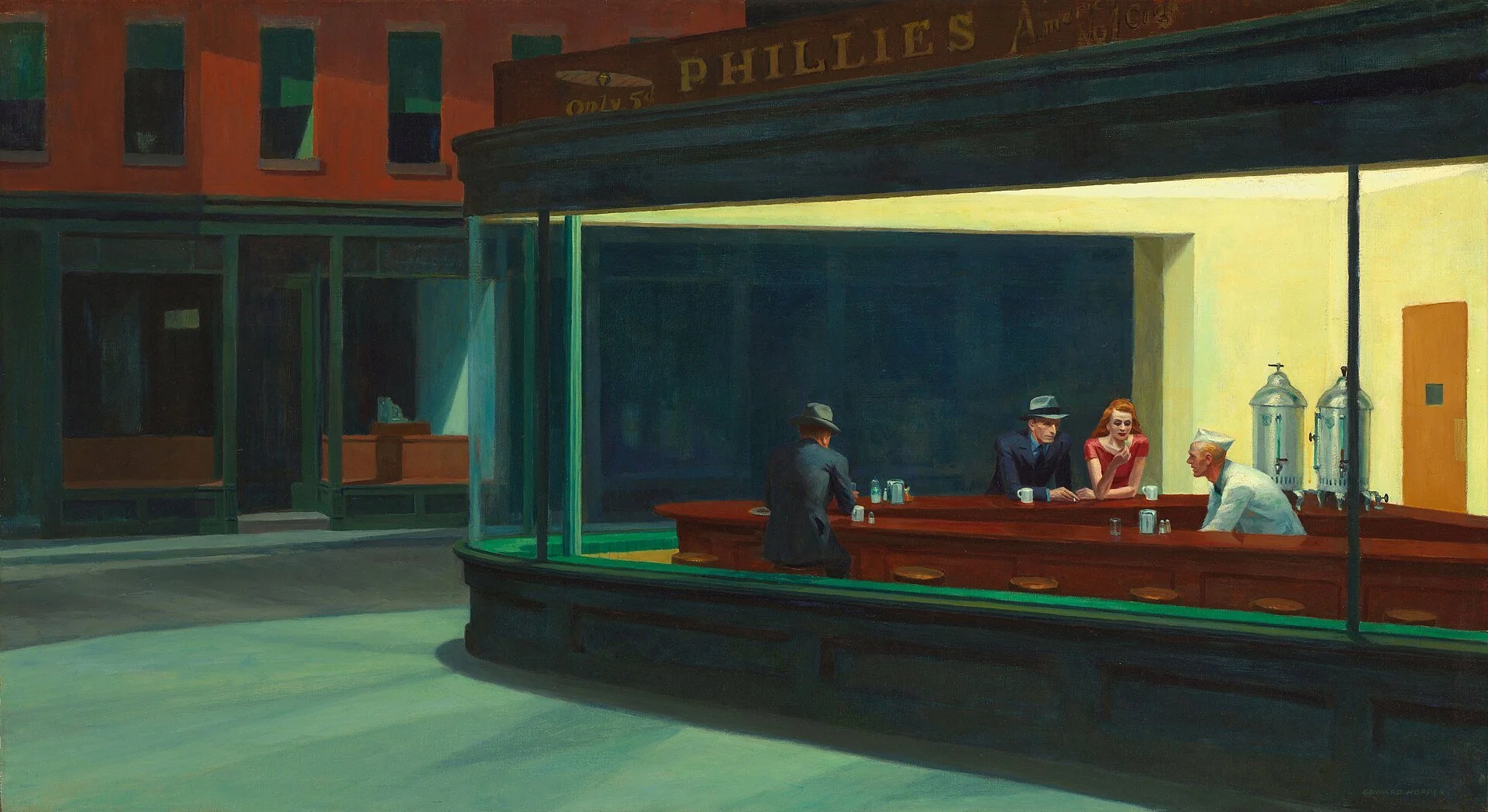


Nighthawks by Edward Hopper, 1942
Edward Hopper - http://www.artic.edu/aic/collections/artwork/111628
Nighthawks is a 1942 oil on canvas painting by the American artist Edward Hopper that portrays four people in a downtown diner late at night, as viewed through the diner's large glass window. The light coming from the diner illuminates a darkened and deserted urban streetscape.
The painting has been described as Hopper's best-known work[1] and is one of the most recognizable paintings in American art.[2][3] Classified as part of the American Realism movement, within months of its completion, it was sold to the Art Institute of Chicago for $3,000 (equivalent to $59,110 in 2025).
________________________
Last Comment
Since I’m planning on next May in Paris, I’ve started researching the visit.
I very quickly felt the power of AI.
”If it’s going to rain all day today, how should I plan out the day?”
In the old days it could take days to fully research the question.
Today, that research is presented in half a minute.
Thinking I would like to write a book on my trip.
Realizing I have to carefully ask for research help but do the actual writing myself.
Oh boy!
!!!!!!!!!!!!!!!!!!!!!!!!!!!!!!!!!!!!!!!!!!!!!!!!!!!!!!!!!!!!!!!!!!!!!!!!!!!!!!!!!!!!!!!!!!!!!!!!!!!!!!!!!!!!!!!!!!!!!!!!!!!!!!!!!!!!!!!!!!!!!!!!!!!!!!!!!!!!!!!!!!!!!!!!!!!!!!!!!!!!!!!!!!!!!!!!!!!!!!!!!!!!!!!!!!!!!!!!!!!!!!!!!!!!!!!!!!!!!!!!!!!!!!!!!!!!!!!!!!!!!!!!!!!!!!!!!!!!!!!!!!!!!!!!!!!!!!!!!!!!!!!!!!!!!!!!!!!!!!!!!!!!!!!!!!!!!!!!!!!!!!!!!!!!!!!!!!!!!!!!!!!!!!!!