
______________________________________
Tucker’s Cover
November 9, 2025
# 1738

__________________________
Dom’s Thoughts from Porch: Cover
The United States Armed Forces are the paradoxical illustration of strength wielded to protect peace. From our rebellion against the English Monarchy and the host of conflicts that followed including, and the Lord knows not limited to, the Mexican War, the Spanish-American War, Normandy, Vietnam, and countless other conflicts, the safety and well-being of our nation is in the hands of these millions of women and men who sacrifice comfort, routine, and certainty. They endure missed birthdays, long deployments, and the emotional toll of service in which early mornings, precise drills, and the choreography of duty are habits as ordinary and unrelenting as brushing one’s teeth, and as vital to the nation’s breath as the air we share. Service men and women are guardians not just of borders, but of everyday life.

Soldiers from the 2nd Infantry Division conduct an area reconnaissance mission in Baghdad.
Petty Officer 1st Class Marton Anton Edgil. - https://web.archive.org/web/http://www4.army.mil/armyimages/armyimage.php?photo=11213
___________________________________________
Dom’s thoughts from the Porch on St. Martin
Saint Martin's Day or Martinmas and historically called Old Halloween or All Hallows Eve, is the feast day of Saint Martin of Tours and is celebrated in the liturgical year on 11 November. In the Middle Ages and early modern period, it was an important festival in many parts of Europe, particularly Germanic-speaking regions. In these regions, it marked the end of the harvest season and beginning of winter and the "winter reveling season". Traditions include feasting on 'Martinmas goose' or 'Martinmas beef', drinking the first wine of the season, and mumming. In some German and Dutch-speaking towns, there are processions of children with lanterns sometimes led by a horseman representing St Martin. The saint was also said to bestow gifts on children. In the Rhineland, it is also marked by lighting bonfires.

St Martin's Day Kermis by Peeter Baltens (16th century), shows peasants celebrating by drinking the first wine of the season, and a horseman representing the saint
_____________________________________________________________
Dom’s thoughts from the porch: Taylor Swift (Inspired by an article in Wikipedia)
“How You Get the Girl” plays a special role in Taylor Swift’s discography. Released on her 2014 album 1989, the song marks Swift’s full transition into pop, and “How You Get the Girl” stands out as a scripted apology, a rare narrative in pop music. Instead of expressing heartbreak or longing from the singer’s own perspective, Swift adopts the voice of the boy who left, imagining what he’d say if he truly wanted to win her back. Some of her suggestions:
· “Stand there like a ghost / shaking come the rain.”
· “Say I want you for worse or for better.”
· “Tell her how you must have lost your mind.”
Each line is a cue card with the emotional vocabulary for expressing regret, longing, or love in a way that’s emotionally raw but also direct and understandable. The song doesn’t hide behind metaphor or vague sentiment. Instead, it lays out the emotional stake plainly: the boy messed up and he wants her back. The song teaches exactly what he needs to say and do. It’s a guide, not a plea. It’s not a casual, flip text, but an expectation that a real effort is required.
During her Eras Tour, Swift highlighted this track as one she particularly enjoys performing, and fans have embraced it as a surprise song with emotional resonance, especially for those navigating reconciliation or reflecting on missed chances.

Taylor Swift
marcen27 from Glasgow, UK - Taylor Swift 7
Taylor Swift 7
I asked AI about her onstage presence:
Taylor Swift is widely regarded as a superior onstage performer, known for her emotional connection with audiences, theatrical storytelling, and ever-evolving vocal and visual artistry.
Over the years, Swift has transformed from a country ingénue into a stadium-filling pop icon, mastering the art of live performance through relentless refinement. Critics and fans alike praise her for:
Narrative-driven concerts: Her shows aren’t just musical — they’re editorially curated experiences. The Eras Tour, for example, spans her entire discography, with each era given distinct visual and emotional texture.
Vocal growth: Early in her career, Swift faced criticism for inconsistent live vocals — notably during the 2010 Grammys with Stevie Nicks. She responded by taking vocal lessons and evolving her technique, now showcasing impressive control and emotional nuance.
Audience intimacy: Even in massive stadiums, Swift has a knack for making fans feel seen. Her stripped-down acoustic sets, like “Call It What You Want” on SNL, reveal a raw sincerity that resonates deeply.
Theatrical innovation: From floating platforms to mirrored stages, Swift’s performances blend choreography, costume, and set design to enhance the emotional arc of each song. Her Reputation Stadium Tour and Eras Tour are often cited as benchmarks in pop concert production.
Fan engagement: Surprise songs, easter eggs, and direct interactions make her concerts feel participatory — a shared ritual rather than a one-way spectacle.
While some recent reviews of her album The Life of a Showgirl noted predictability in musical choices, her live performances continue to be celebrated for their emotional clarity, editorial precision, and immersive scale.
_____________
Tucker’s Corner

V For Vendetta
“People should not be afraid of their governments. Governments should be afraid of their people.”
I first saw V for Vendetta in 2006 when I was 17 years old. It was pure happenstance that a film with the political and social ideologies it carries dropped into my lap when I was first coming online as a person with things to say about such stuff. In 2025 we’ve seen many news stories centered around the idea of what can radicalize an individual and cause them to act in the name of a belief system. But for all the violence on display in V for Vendetta it is at its heart a film about personal integrity and how that notion should impact our political lives.
Much of the script is rendered faithfully from Alan Moore’s graphic novel and spoke so much to the young man I was developing in to. On the verge of adulthood teenagers don’t really own very much. We’re still in a world in thrall to our elders. That’s why some of the films lines of dialogue spoke so powerfully to me: “Our integrity sells for so little, but it is all we ever have - it is the last inch of us. The only inch that matters!”
Eighty thousand Londoners have died in an act of germ warfare for which terrorists have been blamed. The state has turned from 'nanny' to fascist; the media show a Goebbelsian respect for the truth and a zeal for censorship; homosexuals, 'ethnics' and dissidents are mysteriously 'vanished'; the people are in the long sleep of fear and lethargy. The film takes place in a fictional 2020. Now, five years later in our real timeline, things aren’t looking all that different, are they?
Into this bleak world comes V, a man in a white clown-mask who takes as his model a long-forgotten English terrorist: Guy Fawkes. The original novel's respect for Fawkes is one of its sillier aspects - Fawkes was no truth-loving anarchist destroying in order to create but a Catholic with a grudge against the Protestant majority. And Che Guevara was no prince amongst men either, but then young people aren't sticklers for history.
What they are, however, is impassioned. They believe, like V, that 'everything is connected', that 'a revolution without dancing isn't worth having', and 'truth, freedom and justice are more than mere words - they are perspectives'. They find it quite reasonable that V should come upon young Evey Hammond (Natalie Portman), lock her up, torture her and allow her to believe she will be executed if she doesn't give the state a piece of information - all in order to set her (existentially speaking) free.
Without spoiling anything, I think I can tell you that during her incarceration, Evey is sent pieces of a story, pushed through a hole in the prison wall, and this story gives her the strength to resist her torture, to find an integrity she didn't know she had, and to radicalize her.
The story she reads is a gift (the person who wrote it is about to die and can expect nothing in exchange) and therefore also an act of love. Acts of love, because they are unattached to the world of commodities, are radical propositions. The critical complaint that a girl is put through a sadomasochistic experience by a man in a mask misses a key element of the story that is in both book and film: the man in the mask was radicalized in the exact same way. The gender is irrelevant; the humanity is everything.
The film isn’t just an ethics seminar though. Director James McTeigue gives us dozens of reasons to cheer as V battles corrupt cops, blows up monuments, and takes his revenge on a system that those involved in it believed was too big to fail. This film understands that for all the thinking that is required for a story like this to be told you still need to let the kids out for recess once in a while.
The message of V for Vendetta is simple: change is possible. And despite the violence for the sake of entertainment present in this movie, change doesn’t have to be a violent act. It simply requires those who want change to stand up. To speak up. To commit to our beliefs and keep those who would hold us down from rising to power.
____________________
Chuckles and Thoughts

_________________
Six Word Stories
Her suitcase waited. He never arrived.
This story is a portrait of abandonment. The suitcase is proxy for her — full of anticipation, now stranded. His absence is a rupture in trust.

The Wounded Deer is an oil painting by Mexican artist Frida Kahlo created in 1946. It is also known as The Little Deer. Through The Wounded Deer, Kahlo shares her enduring physical and emotional suffering with her audience, as she did throughout her creative oeuvre. This painting in particular was created towards the end of Kahlo's life, when her health was in decline. Kahlo combines pre-Columbian, Buddhist, and Christian symbols to express her wide spectrum of influences and beliefs.
Kahlo was injured at the age of 18 in a bus accident that resulted in serious injuries to her entire body. Her spine, ribs, pelvis, right leg, and abdomen were particularly damaged. She would deal with the wounds from this accident for the rest of her life. Kahlo painted this self-portrait after an operation on her spine, which would leave her bedridden for almost a year. During her recovery, she wore a steel corset, which can be seen in her late self-portraits. Her right leg would eventually be amputated up to her knee, as a result of gangrene.
___________________
SDM Book Review
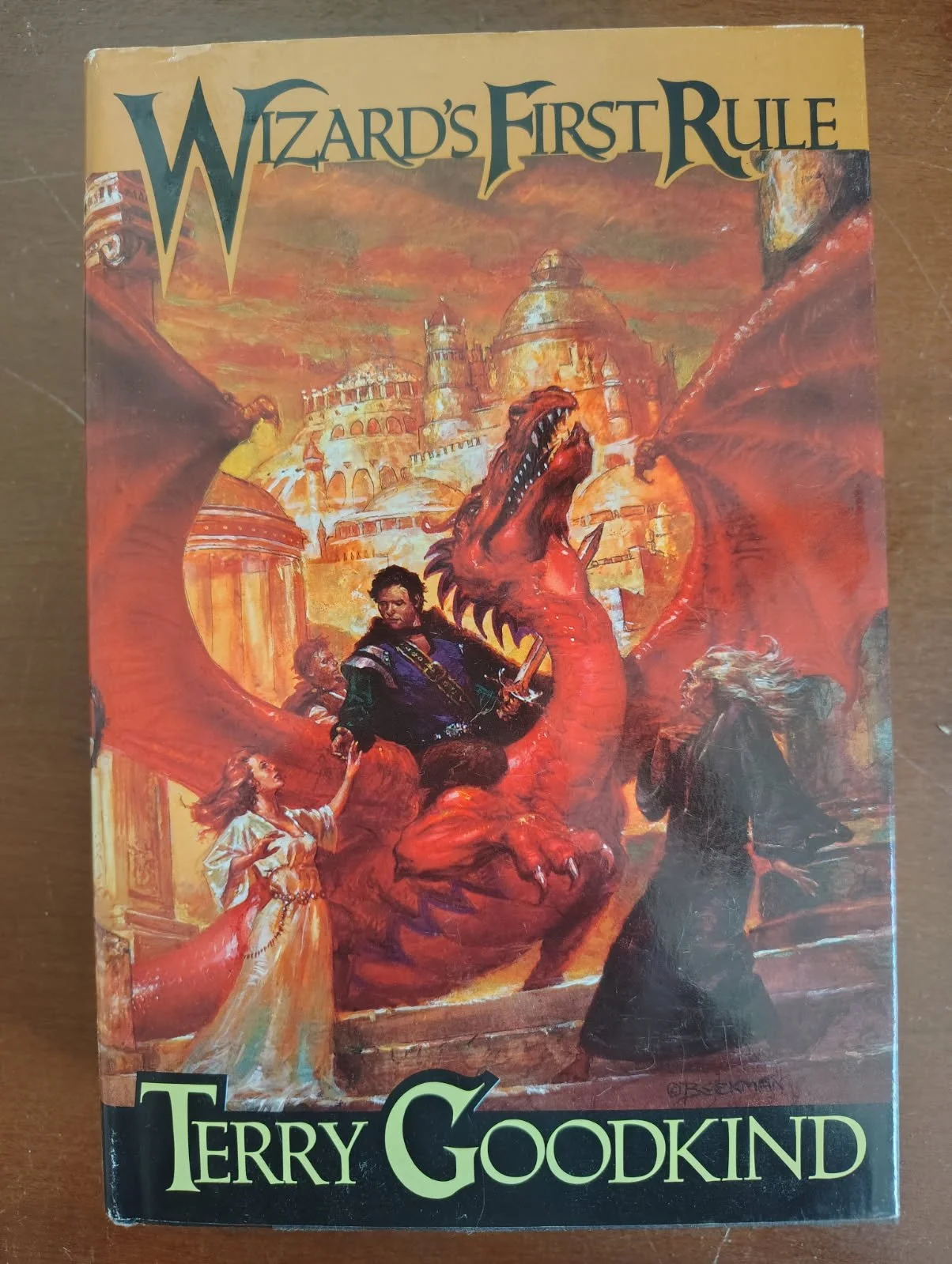
A fantasy for the ages! Each book in the series deals with a different form of tyranny. This is worth the read.
______________________
Lisa’s Corner: A Room with a View
In this age of McMansions, our rural community boasts stately historic colonials and impressive manors overlooking acres of fields and woods. Our modest home is none of those things. But what it lacks in grandeur is more than compensated by the million-dollar view from every room. Looking out our windows in every direction is like living in a treehouse, where we wake each day to the light and colors of the wilderness pond and the surrounding marshes. We are healthier, happier, and spiritually enriched by nature’s generosity and artistry. All because of a room with a view.

Arrangement in black and white
We have VIP front row seats to God’s immersive experience that beats paying for a traveling 3D show of Van Gogh or Dali’s art. Like the Eye in Las Vegas, our “treehouse” engages us in all directions as if we are living in a painting. We watch for hours the changing light and color dance on the pond. We observe early dawn, late dusk, rain, snow, wind and rainbows while simply sitting in one place looking at nature. The therapeutic effect is priceless.
Monet created his Rouen Cathedral and Haystack series to capture the beauty and mystery of the changing light and color at different times of day using the facade of a church and haystacks scattered in a field. Sorry Monet, but from our treehouse window perch, we can observe a lot more than you could see! Haystacks are nice (as I noted in one of my prior columns), but did Monet ever paint the mist on the surface of our pond as it dissipates when the sun begins to peek through the trees and rises above them, blinding us with light? What about the dual sunset of light reflected perfectly off the water, blurring the line between the real sky and its reflection? Or seeing the sun shine on the front lawn while the back window displays the gray, rainy surface of the pond? Monet was a talented artist, but he definitely lost a monumental opportunity to paint the Pond series. What a loss to humanity.

Wowsa Sun
Our daily immersion in this natural art isn't just a pleasure; it has a measurable benefit. The restorative power of nature has been documented for decades, beginning with a well-known hospital study conducted back in the 1980s that conclusively determined surgical patients who were placed in a room with a view of nature recuperated quicker and required less pain medication. Can you imagine the health care benefits if hospitals or rehab clinics could inexpensively add windows, or even fake windows with painted nature scenes. Further studies have proven that even having screenshots of nature on computers help workers to feel better and less stressed.

Blue Pond Series
I've long been fascinated by a concept known as biophilic urbanism. Biophilia refers to our innate, genetic affinity to nature—the deep need and craving for a connection with living things. Urban planners are incorporating this hypothesis into action, designing cities that move beyond concrete brutalism to integrate nature directly into the urban landscape. This trend is a positive step toward realizing that we are healthier and happier when we can see nature around us. Not everyone can have a wilderness pond in their backyard, but all of us need a room with a view.

Mist on the Water
________________
Last Comment
Another Halloween is past and Thanksgiving looms.
Love the holiday.
They distract us from the increasing darkness.
They distract us from frigid temperatures.
They distract us from the boredom that settles too early in the cold, dark evenings.
They give us reasons to be in good cheer and to visit loved ones.
They give us reasons to light candles, to bake with intention, to remember warmth as a shared act.
So here’s an early Christmas song for you..
It’s brought smiles to me every season.
Albert The Antelope
by davew
December 21, 1999
Albert, the amber-assed antelope
Had a very shiny ass,
And if you ever saw it
You would say it looked like glass.
All of the other antelopes
Used to laugh and call him names,
They never let poor Albert
Join in any antelope games.
Then one foggy Christmas eve
Santa came to say,
"Albert, with your ass so bright,
Won’t you be my back up light.?"
Then how the antelopes loved him,
As they shouted out with glee,
"Albert, the amber assed antelope,
You’ll go down in history!"

One is a gazelle.
The other is our Christmas friend.
!!!!!!!!!!!!!!!!!!!!!!!!!!!!!!!!!!!!!!!!!!!!!!!!!!!!!!!!!!!!!!!!!!!!!!!!!!!!!!!!!!!!!!!!!!!!!!!!!!!!!!!!!!!!!!!!!!!!!!!!!!!!!!!!!!!!!!!!!!!!!!!!!!!!!!!!!!!!!!!!!!!!!!!!!!!!!!!!!!!!!!!!!!!!!!!!!!!!!!!!!!!!!!!!!!!!!!!!!!!!!!!!!!!!!!!!!!!!!!!!!!!!!!!!!!!!!!!!!!!!!!!!!!!!!!!!!!!!!!!!!!!!!!!!!!!!!!!!!!!!!!!!!!!!!!!!!!!!!!!!!!!!!!!!!!!!!!!!!!!!!!!!!!!!!!!!!!!!!!!!!!!!!!!!