__________________________________
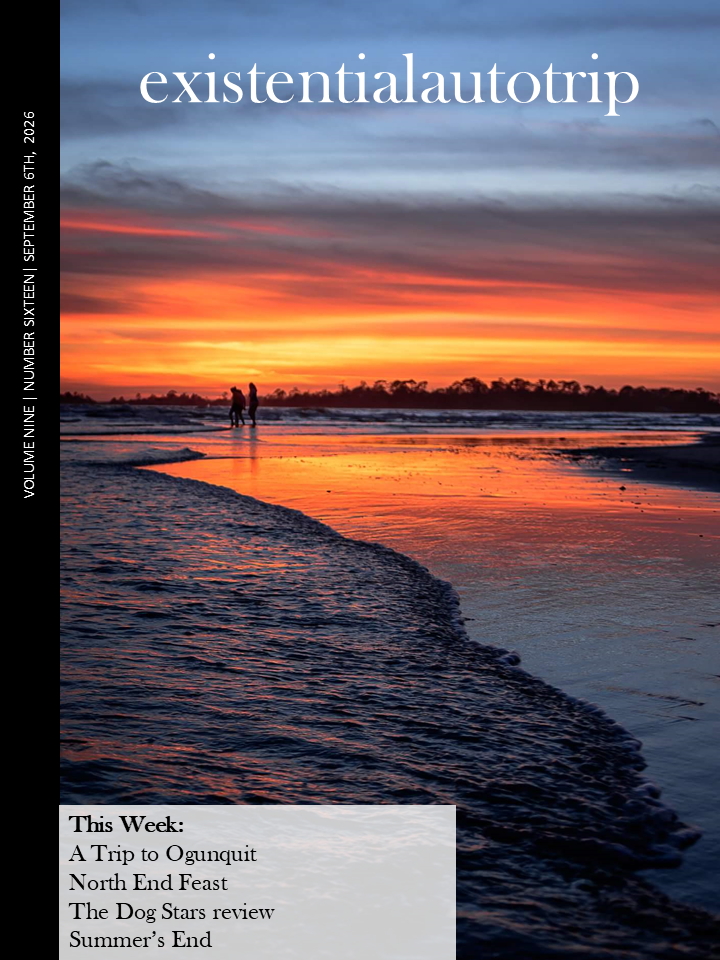
Tucker’s September 6, 2026 cover
# 1780

Summer dog-sitting in NYC
_______________________________________________________
Thoughts from Dom’s Porch: Casual daytrip to Ogunquit
The summer gives us these three opportunities.
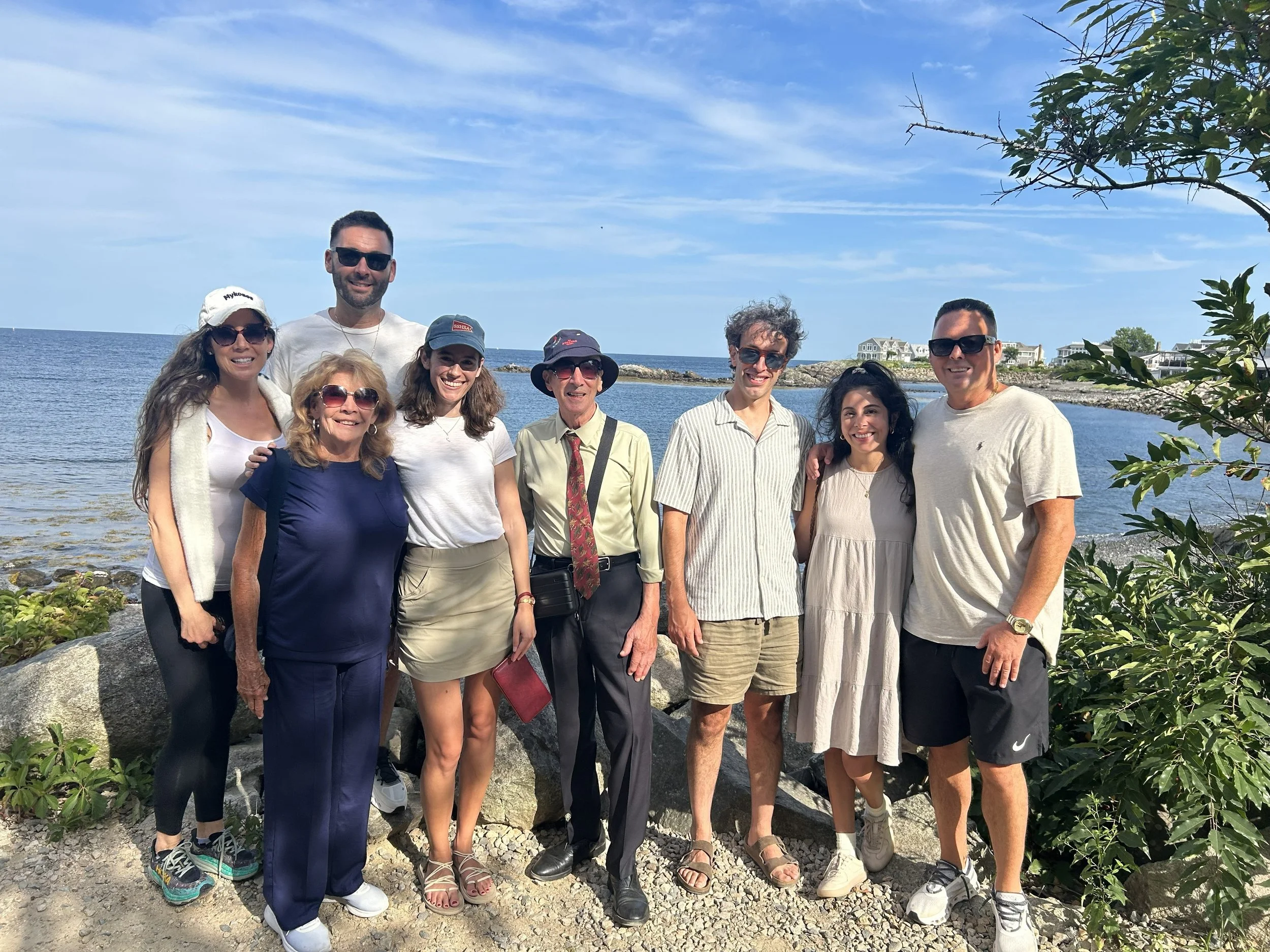
from left: cousins Lauren and cousin Robert, aunt Patty, niece Tessa and me, Stephen and Kat, a set, and cousin Alex
_____________________________________
More from Porch: North End Feasts:
Frank DePasquale in the middle.
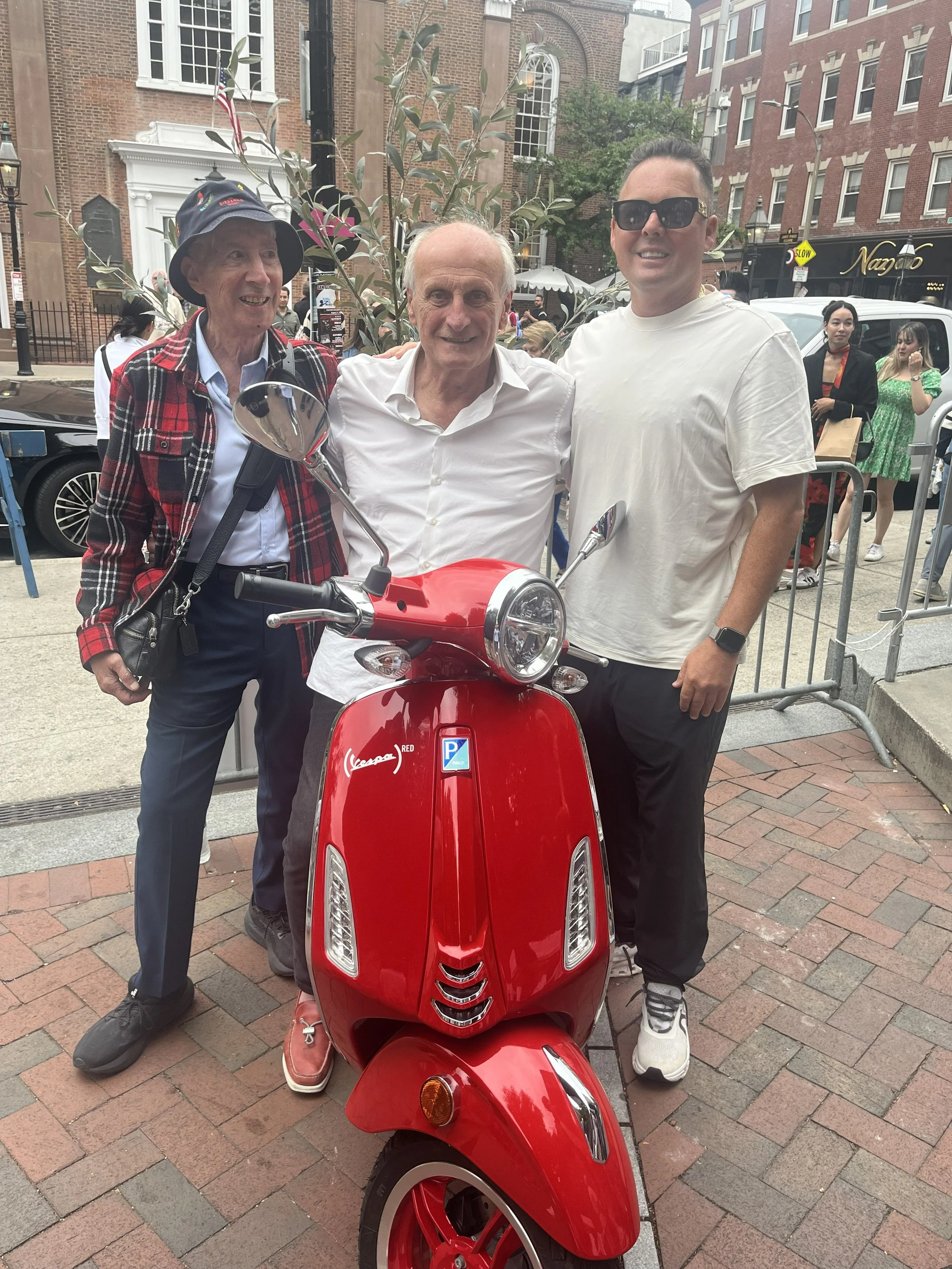
From left: Dom, Frank DePasquale, cousin Alex
If you enjoy the North End, attend the summer ‘feasts’.
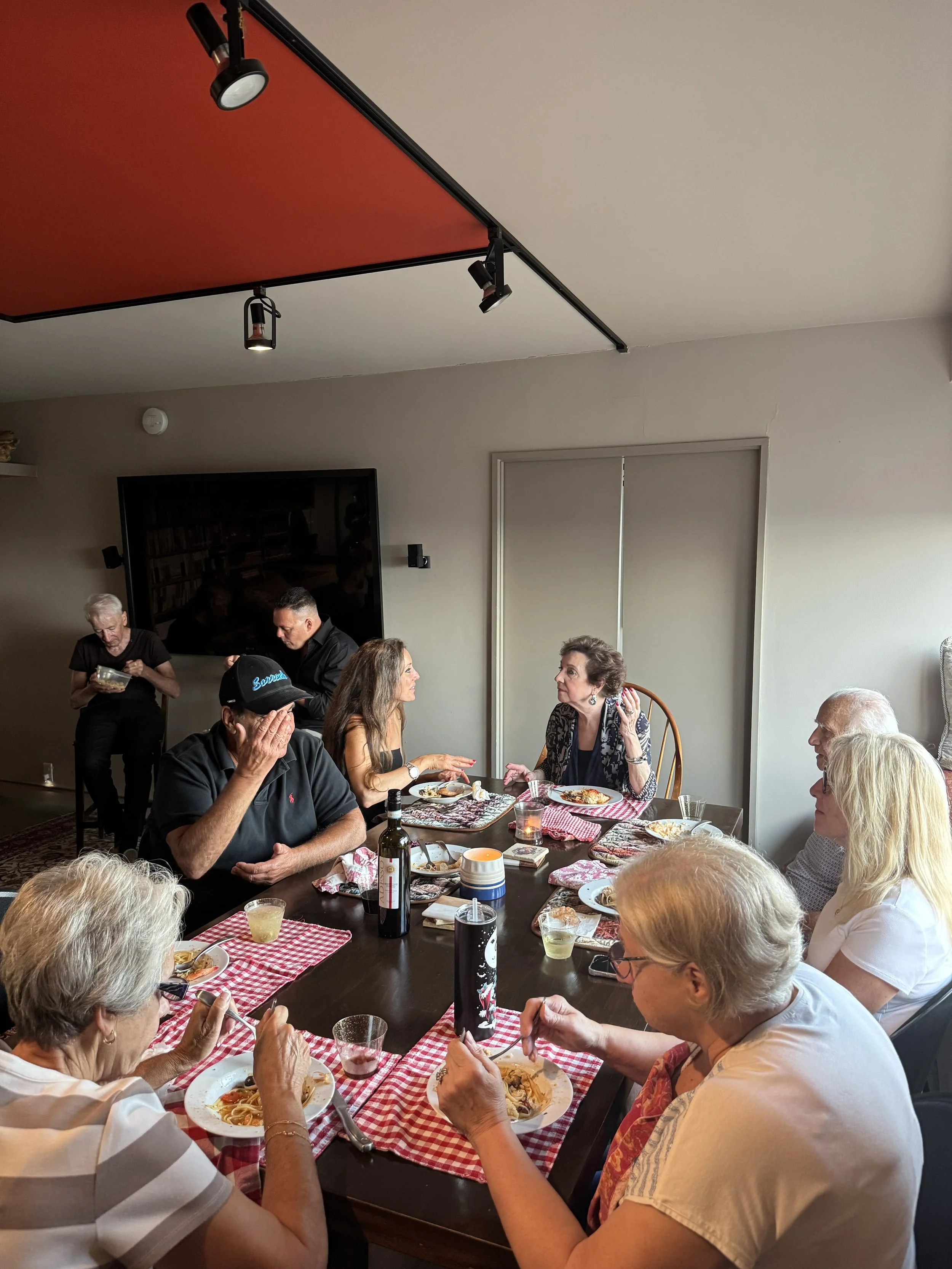
An easy to eat Frutta di Mare plate at Dom’s
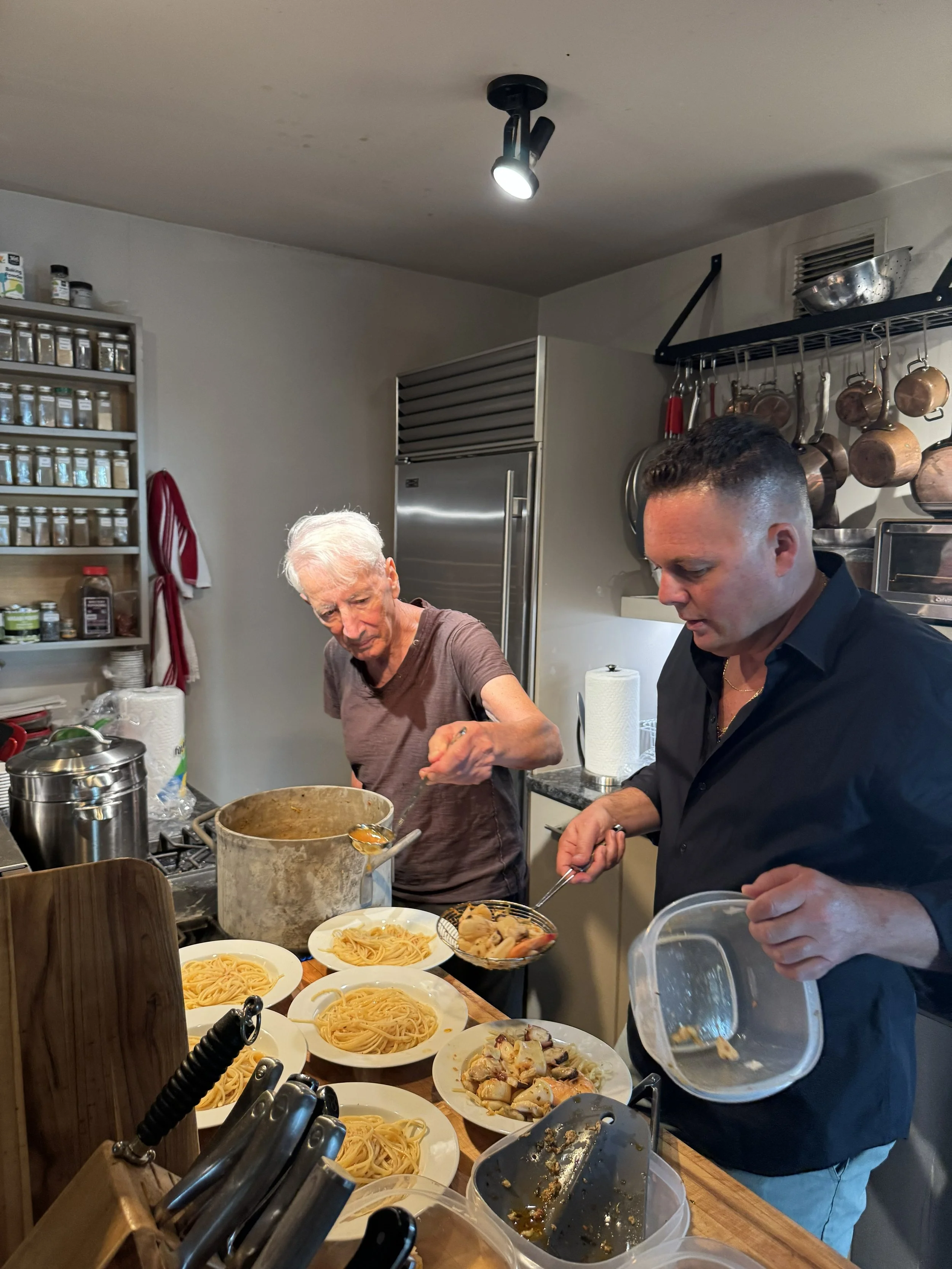
Entertainment in the summer: some cook, some eat.

Summer’s a good time to visit the beloved deceased.
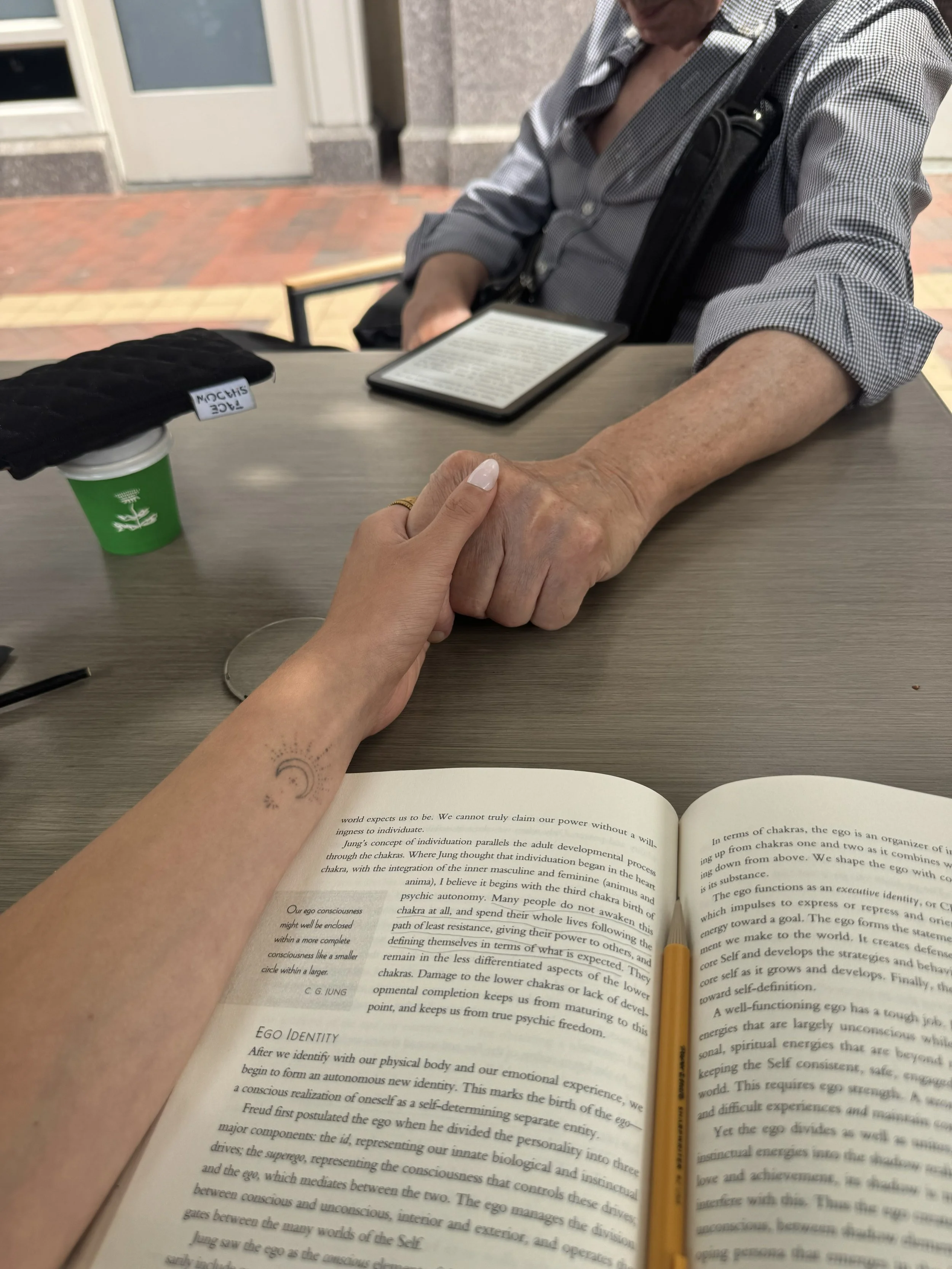
Summers give fathers and daughters time to read together.
_________________________________
Tucker’s Corner
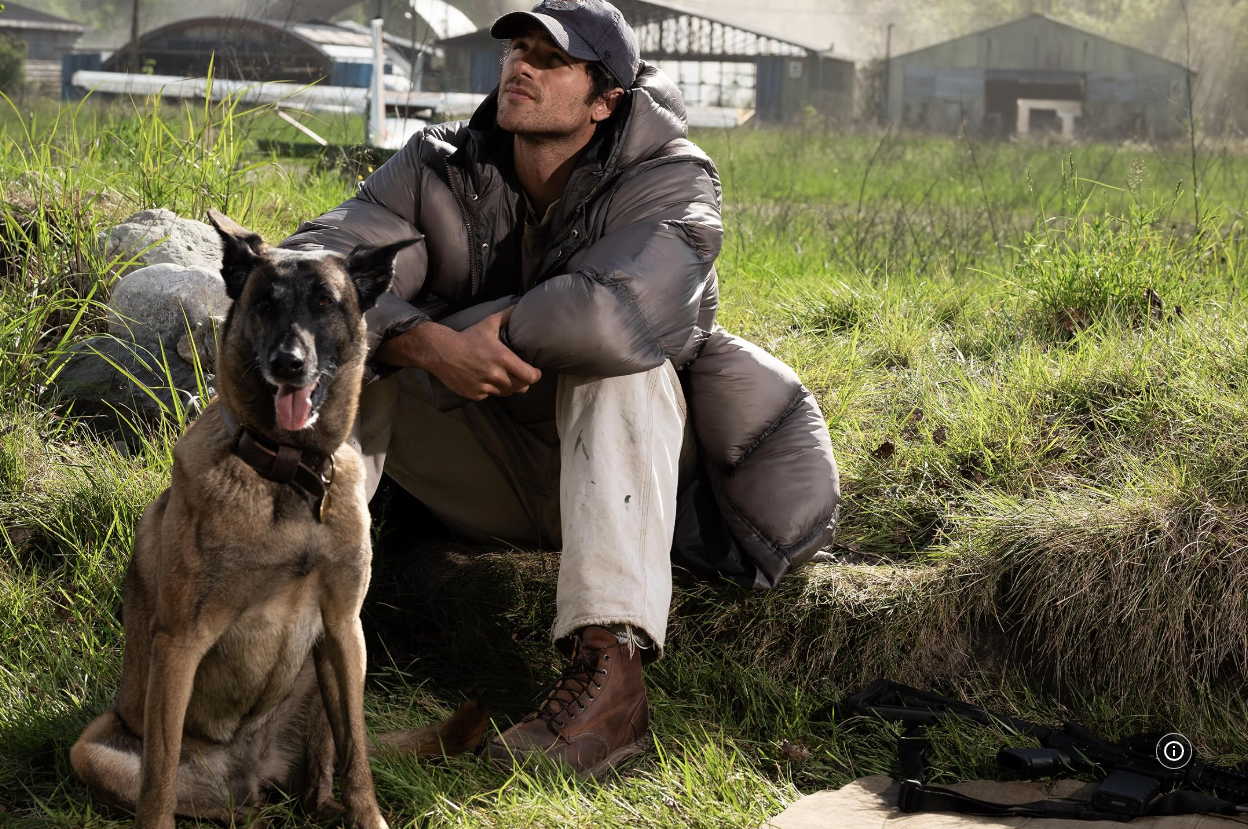
The Dog Stars
“So I will not ask you where you came from
I would not ask and neither would you
Honey, just put your sweet lips on my lips
We should just kiss like real people do”
Hozier
The Spanish-American philosopher George Santayana once wrote: “Those who cannot remember the past are condemned to repeat it.” Ridley Scott’s latest film attempts a more complex interrogation: what of those who do remember the past, but condemn themselves to its repetition?
Is there any salvation from that hell?
A robust survivalist drama, “The Dog Stars” is Scott’s best movie in several years — not to mention, his most conflicted. While it resembles the post-apocalyptic genre films Hollywood tends to make, there are no zombies or humanoid apes to be found. Rather, its characters are haunted only by their histories — personal, political, and cultural — in a film that wrestles uncomfortably with historical imagery, in its pursuit of pushing forward through impossible circumstances.
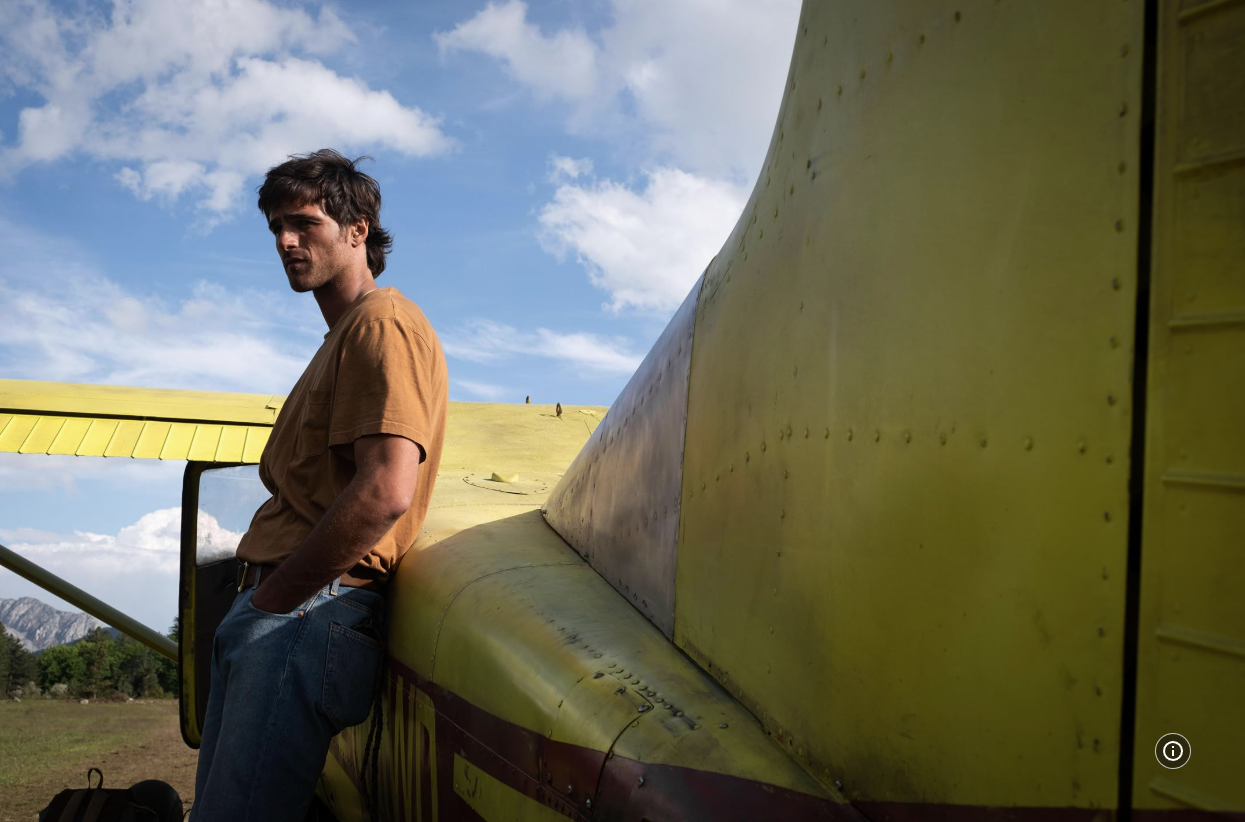
The world as we know it ceased to be, at some point, a few years ago. As burdened protagonist Hig (Jacob Elordi) patrols overhead in his Cessna light plane (alongside his loyal Belgian Shepherd Jasper), we’re introduced to the Denver of the near future, a city overrun with flora and fauna, but bereft of human life. Frozen in time are the many fast food joints and Coke products that no doubt paid for product placement, but these provide a sense of how, thanks to an unnamed respiratory disease — influenza in Peter Heller’s 2012 novel, but an echo of COVID in Mark L. Smith’s screenplay — a society of unchecked growth came to a screeching halt.
Hig lives on an abandoned air strip in Erie, Colorado with the grizzled, gun-toting Bangley (Josh Brolin), a paranoid father-figure whose eagerness to snipe armed travelers has kept them alive. To Bangley’s chagrin, Hig makes frequent visits to a nearby Mennonite town to provide mechanical assistance and drop off supplies to its ailing children — that is, when he isn’t covertly walking through his abandoned Denver home, where his pregnant wife Melissa (Sai Bennett) succumbed to the disease.
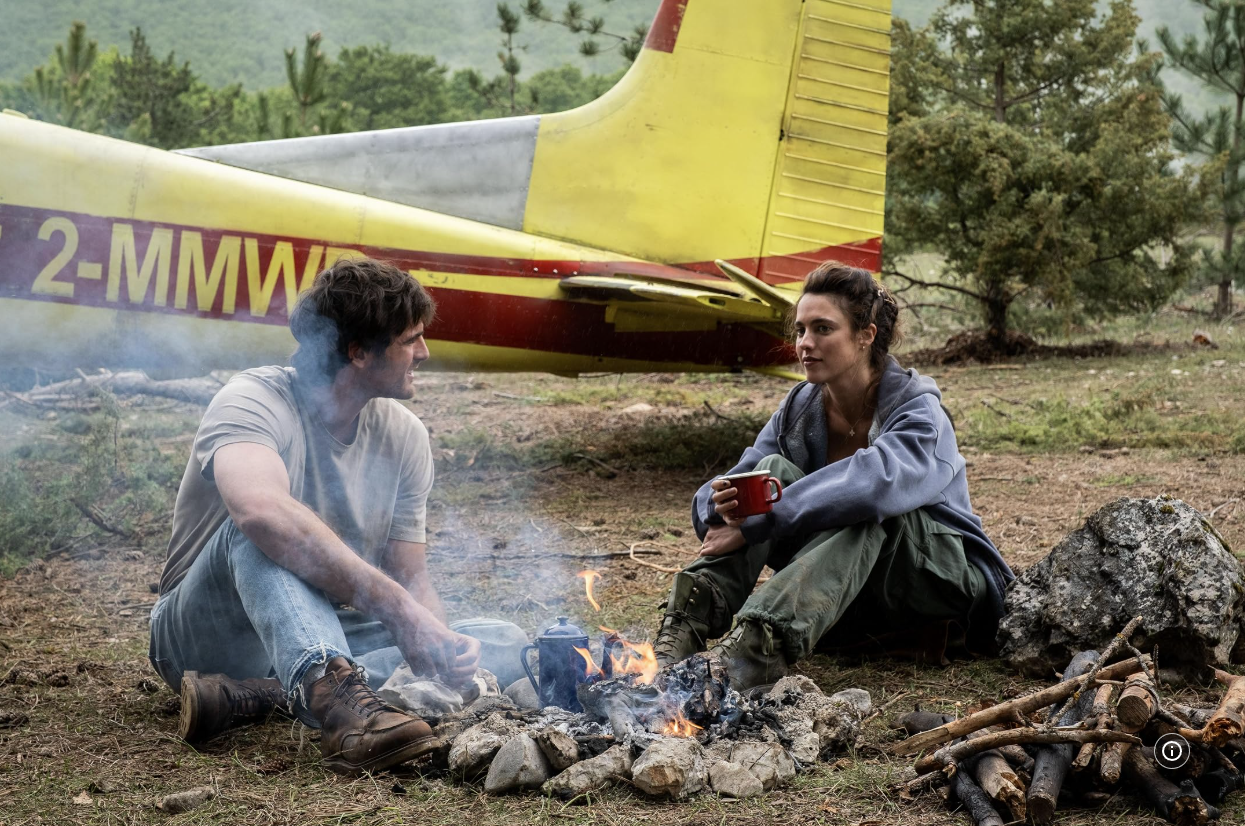
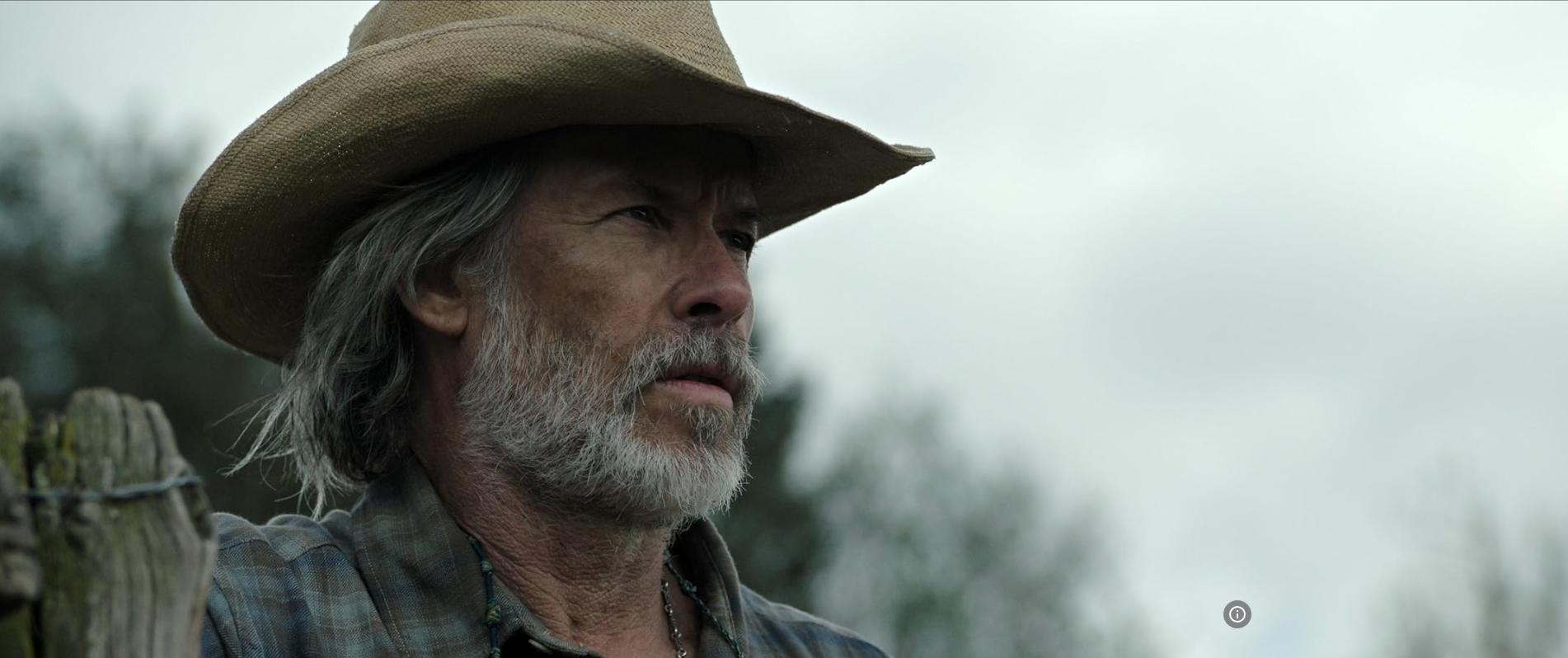
This painful past both urges Hig to help whoever he can, while also tempting him to leave his little patch of life behind and fly away to a rumored promised land of survivors. But when he eventually attempts this journey, he finds himself stranded in a valley where his only help is a two-person commune not dissimilar from his own, consisting of the doe-eyed, widowed doctor Cima (Margaret Qualley) and her own armed, suspicious father, “Pops” (Guy Pearce).
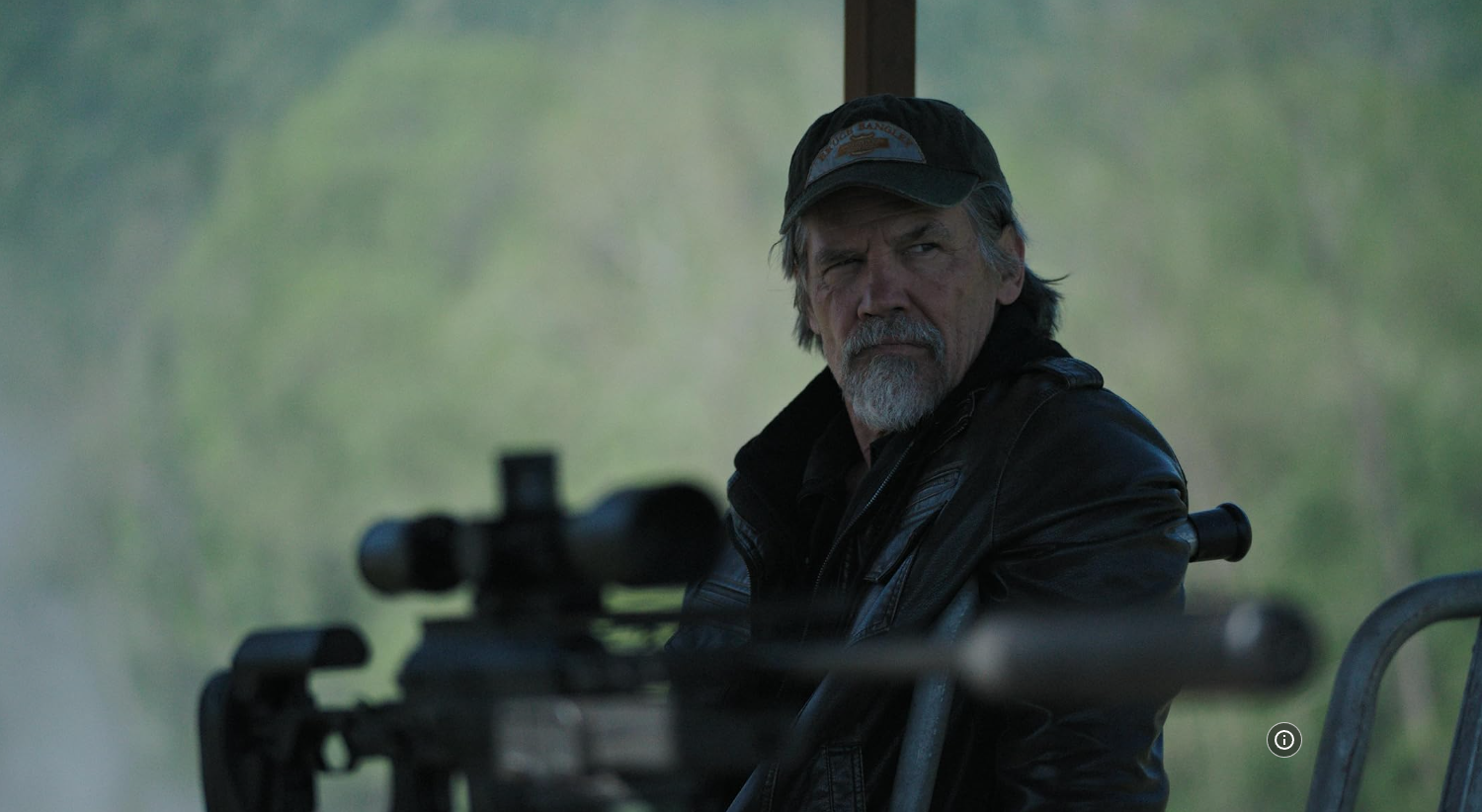
Built on character-centric dialogue (and equally detailed dramatic silences), all of Hig’s dilemmas, over whether to stay or leave, find him retreating into his grief for answers. This affords Elordi an anguished performance, whether carefully scrutinizing the streets, or drifting aimlessly overhead. When he’s lost in agonizing thought, you’ll think you can fix him, and so does Cima (though their romance starts out world-weary — almost ghostly). However, while Hig’s meditative inner conflicts clash with Bangley, Cima, and Pops, owing to their respective outlooks on how to survive, and how to keep on living, there’s a thundering quality to the occasional action scenes — one of them, a chaotic night-vision stunner — wherein both strongholds find themselves under fire from hedonistic survivors.
Bangley refers to these interlopers in dehumanizing terms (“roaches,” he calls them), and although the film refutes his rugged individualism by way of Hig’s readiness to help, the camera adopts a fearful, conservative quality in its framing. Some of these wanderers are designed like tattooed Latino gangs, in the vein of modern migration fears, while others adopt the broad appearance (and the ululating) of Native American tribes. These groups are multi-ethnic, and their assaults on white, camo-hatted heroes intent on safeguarding an idyllic pastoralism hyper-charges the film with an awkward cultural imagery it refutes in equally awkward ways. It’s by no means some hyper-right-wing screed, at least in the contemporary sense, but its backward gaze finds characters re-enacting a violent American past, from Manifest Destiny to the George W. Bush (and onward) era of immigrant distrust.
“The Dog Stars” builds on these ugly themes in fascinating ways, with its (admittedly rushed) left turn into territory where the dangers of nostalgia become not just rampant — by way of the late introduction of a kooky antagonist — but obvious and on-the-nose, by way of a town fashioned as a simulacrum of idyllic mid-century Americana. It’s jaw-dropping and disconcerting, but it makes for a strangely powerful mirror to characters so burdened by pain that the mere thought of moving through time, further away from their memories of the world as it once was, feels akin to death, or a loss of identity. After all, grief and fear, no matter how misguided, are ultimately the impetus to “Make America Great Again.”
That the movie is locked in constant battle with memory is what makes it so moving. The tension between Hig and Cima — two people shackled by grief, and by a world they remember — feels downright electric, not just because these are attractive stars making eyes at one another, but for its cathartic possibilities and is deeply affecting drama. Scott has long dealt in cynicism — a turn his movies arguably took after the death of his brother Tony in 2012 — but “The Dog Stars” plays like a sincere attempt to move past his cinematic misanthropy, even as the nearly 90-year-old auteur considers the end of the road.
The film is riveting and ruthless, but sentimental enough to open and close with a Hozier song. And given its love of both people and nature, it’s deeply romantic too, in a way Scott’s movies haven’t been in a very long time. Then again, what better way to channel the journey of coming to terms with the past, and what little future might lie ahead, than a film about the struggle to keep on moving once your whole world has ended?
_____________________________
Chuckles and Thoughts
__________________________
Six Word Stories
Letter arrived late; regret arrived early.
I asked AI what the author meant by those words.
Dom — “Letter arrived late; regret arrived early” is one of those six‑word‑story constructions you gravitate toward: compressed, emotional, and quietly devastating.
Here’s the clean, layered reading.
⭐ Core meaning
The author is saying:
The letter — the attempt to communicate, explain, apologize, confess, or reach out — came too late to matter. But the regret — the realization of what should have been said or done — came long before the letter ever showed up.
It’s about asymmetry: the timing of action versus the timing of remorse.
⭐ Emotional tone (your scale)
This sits in the soft‑ache / wound‑adjacent zone. Not catastrophic, not melodramatic — but a quiet, persistent hurt. The kind that comes from recognizing you acted too late, and knowing the other person felt the absence long before the message arrived.
⭐ What each part implies
Each item begins with a Guided Link.
“Letter arrived late” — the gesture, apology, or truth was delayed; the moment when it could have changed something has already passed.
“Regret arrived early” — the remorse was immediate, instinctive, and known internally long before any outward action was taken.
The gap between them — the emotional damage lives in that space: knowing the right thing early, doing the right thing late.
⭐ The deeper layer
It’s really about missed timing in relationships:
Someone knew they were wrong.
Someone felt the regret early.
But they didn’t act.
And by the time they finally did, the window had closed.
The letter becomes symbolic — not of connection, but of too‑late connection.
⭐ One‑line distillation
Regret came fast; courage came slow.
Then I directed AI:
Present to me 5 oil paintings that illustrate this text:
I chose this from the list:
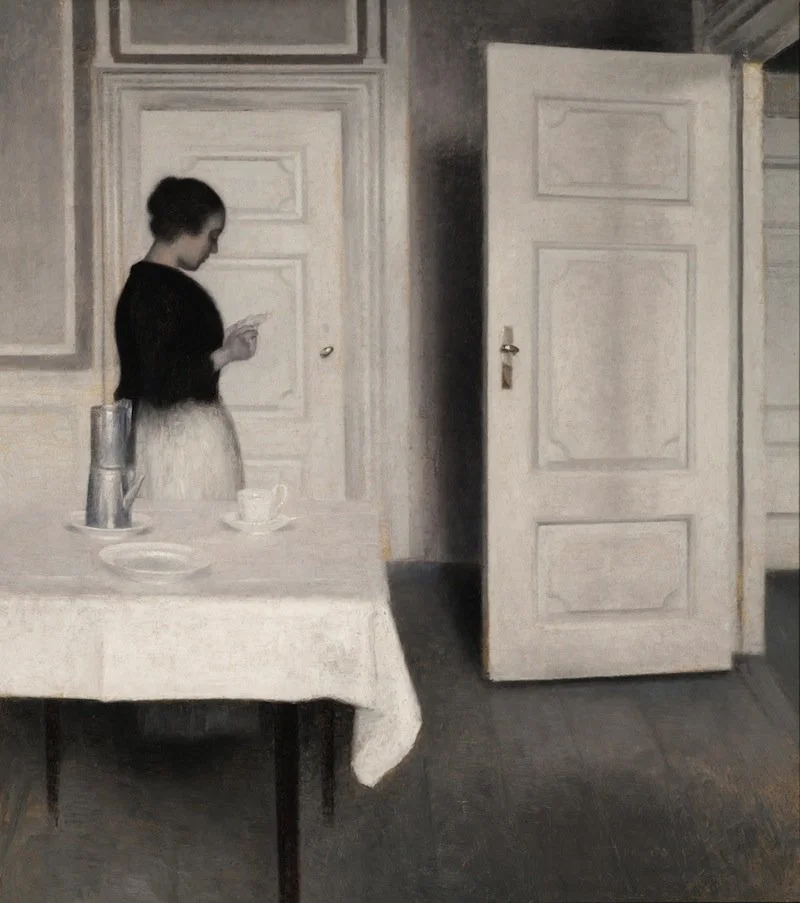
In 1887, Hammershoi travelled to the Netherlands, where he saw first-hand works by Dutch 17th-century master Johannes Vermeer and his Delft contemporaries.[1] This painting shows many characteristics of Vermeer's interiors, usually featuring a woman at an everyday task. This painting seems to have been directly inspired by a Vermeer he must have seen in Amsterdam, Woman in Blue Reading a Letter.[1] The artist use of a similar hairstyle, pose, table and indirect light all recall this painting, and the reduction of household items to a minimum of objects is typical of the 17th-century Dutch interiors. This painting was painted a year after Hammershoi moved into his apartment at Strandgade 30, in Copenhagen.[1]
Description and interpretation
The work shows the artist's wife Ida reading a letter. She is standing near a table laid with a double coffee pot and one cup. The table, the closed door behind her and the open door in her front, all serve to anchor her position in a otherwise gray space. These and other architectural elements of this apartment were often painted by Hammershoi during this period.
_______________________________
In the Mail
From dear friend, Tommy, President of NE Historical Museum:
Thank you Dom for your post on the North End Museum!
The Museum reviews have been so positive and gratifying. I am so very happy that you and Kathy got enjoyed the tour!
I loved the entire magazine today. The paintings you have chosen are amazing stories and graphically enthralling.
Best,
Tom
__________________________
Last Comment
Slip-slidin’ away.
Little Richard’s reaction to the early September summer.
Labor Day is here, and so is the fall.
Did you complain about the heat?
Well, stick around and soon enough the cold weather will be upon and
then we New Englanders will really start complaining.
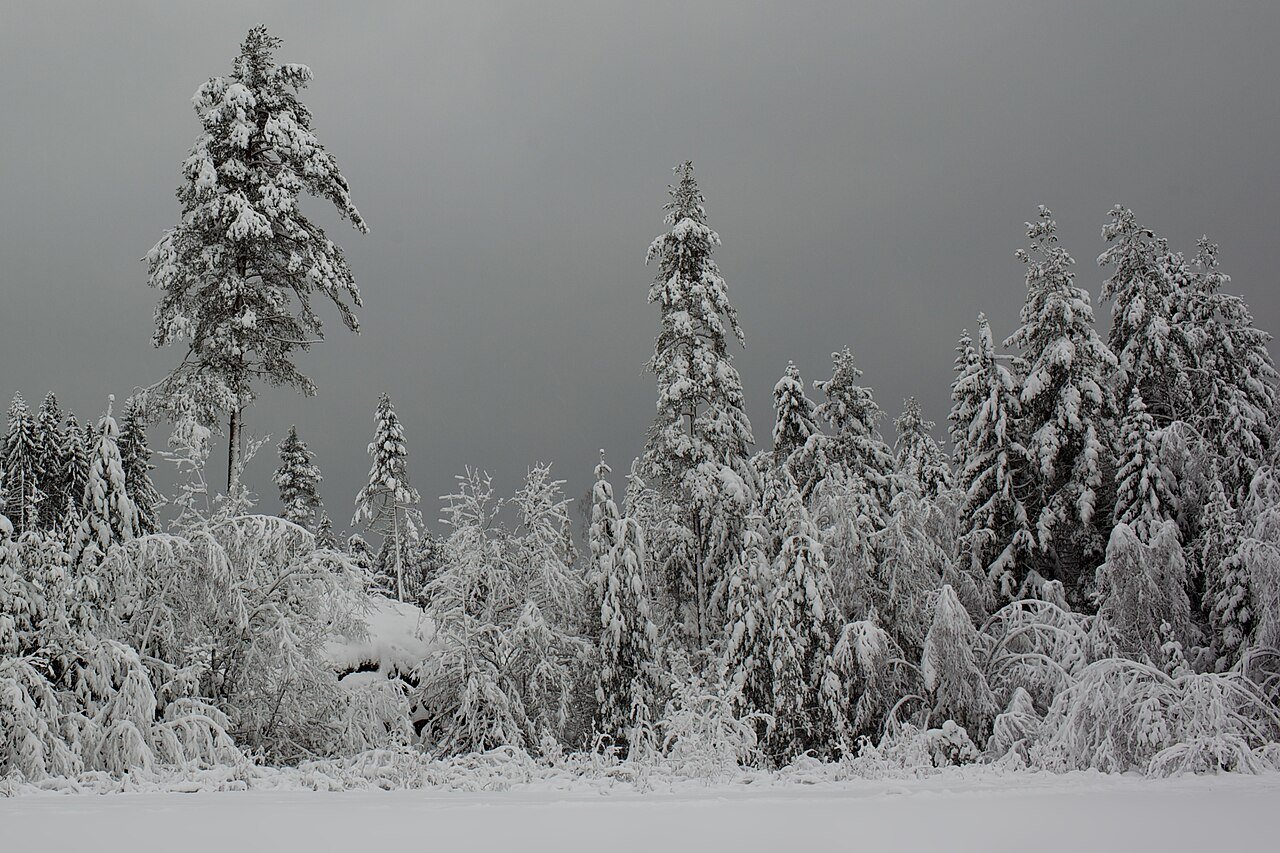
Forest covered in snow during winter in Norway
Ernst Vikne - Silver sky
!!!!!!!!!!!!!!!!!!!!!!!!!!!!!!!!!!!!!!!!!!!!!!!!!!!!!!!!!!!!!!!!!!!!!!!!!!!!!!!!!!!!!!!!!!!!!!!!!!!!!!!!!!!!!!!!!!!!!!!!!!!!!!!!!!!!!!!!!!!!!!!!!!!!!!!!!!!!!!!!!!!!!!!!!!!!!!!!!!!!!!!!!!!!!!!!!!!!!!!!!!!!!!!!!!!!!!!!!!!!!!!!!!!!!!!!!!!!!!!!!!!!!!!!!!!!!!!!!!!!!!!!!!!!!!!!!!!!!!!!!!!!!!!!!!!!!!!!!!!!!!!!!!!!!!!!!!!!!!!!!!!!!!!!!!!!!!!!!!!!!!!!!!!!!!!!!!!!!!!!!!!!!!!!